Have you ever wondered what separates a good restaurant chili from an absolutely amazing homemade version? The secret often lies in building deep, complex flavors that simply can’t be replicated in a high-volume kitchen. Making your own pot of chili at home gives you complete control over the spice level, the quality of meat, and the balance of ingredients.
When you craft a Beef Chili from scratch, you unlock the ability to customize every single component to your family’s preferences. This process transforms a simple dish into a personal culinary masterpiece. The benefits go far beyond just taste; you get to choose the freshest vegetables, avoid preservatives, and manage the sodium content. Creating a satisfying hearty beef chili allows for meal prep for the week ahead or a comforting dinner on a chilly evening. Let’s dive into how you can make this classic American staple better than ever.
Table of Contents
Materials & Supplies
To make a robust and flavorful pot of chili, you will need to gather specific ingredients and tools. Having everything prepped before you start cooking makes the process smooth and enjoyable.
Ingredients & Seasonings
- Ground Beef (80/20 or 85/15): 2 pounds. The small amount of fat adds richness and flavor; leaner meat can result in a drier chili.
- Yellow Onion: 1 large, diced. This provides a sweet aromatic base.
- Bell Peppers: 2 medium (any color), diced. Adds texture and subtle sweetness.
- Garlic: 4 cloves, minced. Essential for savory depth.
- Kidney Beans: 2 cans (15 oz each), drained and rinsed. Adds bulk and texture.
- Diced Tomatoes: 1 can (28 oz) crushed or fire-roasted. Fire-roasted adds a smoky char flavor.
- Tomato Paste: 6 oz can. Concentrates the flavor and thickens the sauce.
- Beef Broth: 2 cups. Use low-sodium to control salt levels.
- Chili Powder: 3 tablespoons. The primary spice blend.
- Ground Cumin: 1 tablespoon. Adds earthy warmth.
- Smoked Paprika: 2 teaspoons. Brings a smoky element.
- Dried Oregano: 1 teaspoon.
- Cayenne Pepper: ½ teaspoon (adjust to heat preference).
- Salt & Black Pepper: To taste (start with 1 tsp salt and ½ tsp pepper).
- Olive Oil: 2 tablespoons for sautéing.
- Optional Add-ins: Brown sugar (1 tbsp for balance), chipotle peppers in adobo (for smoke), or cocoa powder (1 tsp for richness).
Kitchen Tools
- Large Dutch Oven or Heavy Pot: 6-quart capacity minimum. Essential for even heat distribution.
- Sharp Chef’s Knife: For dicing vegetables uniformly.
- Cutting Board: Preferably a large wooden or plastic one.
- Wooden Spoon or Spatula: For stirring without scratching the pot.
- Measuring Cups & Spoons: For accuracy.
- Can Opener: For beans and tomatoes.
- Ladle: For serving.
Substitutions & Dietary Notes
- Gluten-Free: Ensure your beef broth and spices are certified gluten-free.
- Vegetarian: Swap ground beef for a mix of lentils, quinoa, and plant-based meat crumbles.
- Low Carb: Omit the beans and increase the beef or add cauliflower florets.
Timing / Cooking Schedule
Cooking a great pot of chili is a labor of love, but it is surprisingly manageable for a weeknight dinner if you plan well. The active cooking time is relatively short, while the simmering time does the heavy lifting of flavor development.
Prep Time: 20 minutes. This involves dicing vegetables and measuring spices. Pro tip: You can do this the night before to save time.*
- Cook Time: 45 minutes active + 1 hour simmering.
- Total Time: Approximately 2 hours and 5 minutes.
This recipe is meal prep friendly. While the chili simmers, you can clean up your station or prep side dishes. It is also a hands-off cooking dish once the simmer begins, allowing you to attend to other tasks. The recipe yields about 8 generous servings.
Step-by-Step Instructions
Follow these steps precisely to build layers of flavor. Do not rush the sautéing or browning stages; this is where the magic happens.
1. Heat the Oil: Place your large Dutch oven over medium-high heat. Add the olive oil and let it shimmer. This indicates the pan is hot enough to sear the meat without steaming it.
2. Brown the Beef: Add the ground beef to the pot. Break it apart with your spoon, but don’t over-work it immediately. Let it sit for a minute to develop a brown crust, then stir and continue breaking it up until no pink remains (about 5–7 minutes). Drain excess grease if necessary, but leave about a tablespoon of fat in the pot for flavor.
3. Sauté the Vegetables: Add the diced onion and bell peppers to the beef. Cook for 5–6 minutes until softened. The onions should look translucent, and the peppers should be slightly tender. Add the minced garlic and cook for just 1 minute until fragrant—be careful not to burn it.
4. Bloom the Spices: Stir in the tomato paste, chili powder, cumin, smoked paprika, oregano, and cayenne. Cook this mixture for 2 minutes, stirring constantly. Heating the spices in the fat releases their essential oils, intensifying the flavor of your Beef Chili significantly.
5. Deglaze and Combine: Pour in the beef broth, scraping the bottom of the pot to release any browned bits (fond). Add the diced tomatoes (with juices) and the drained kidney beans. Stir everything together.
6. Simmer: Bring the mixture to a boil, then immediately reduce the heat to low. Cover the pot partially with a lid (leave a crack for steam to escape). Simmer gently for at least 1 hour, stirring occasionally. This slow simmer is crucial for melding flavors.
7. Adjust Seasoning: Taste the chili after the hour is up. Add salt, pepper, or a pinch of brown sugar if it tastes too acidic. If you want a thicker consistency, simmer uncovered for an additional 15 minutes.
8. Serve: Ladle the chili into bowls. This is the perfect moment to top your hearty beef chili with shredded cheddar cheese, sour cream, and chopped scallions.
Nutritional Benefits / Advantages
While chili is often viewed as comfort food, it packs a surprising nutritional punch, especially when made at home. The beef provides high-quality protein essential for muscle repair and satiety, keeping you full longer. The kidney beans are an excellent source of dietary fiber, which aids digestion and helps stabilize blood sugar levels.
Tomatoes are rich in lycopene, a powerful antioxidant linked to heart health, and cooking them actually increases the bioavailability of this nutrient. By making this dish yourself, you control the sodium levels, avoiding the excessive salt often found in canned or restaurant versions. Home cooking also ensures you are eating fresh, whole ingredients without unnecessary preservatives or fillers. Economically, chili is a powerhouse; a small investment in ingredients yields a large volume of food, making it budget-friendly for families. Finally, it is highly sustainable; using fresh vegetables reduces packaging waste compared to buying pre-made microwaveable meals.
Tips, Alternative Methods, or Cooking Advice
Flexibility is key in home cooking. Here are several ways to adapt this recipe to your lifestyle and kitchen setup:
- Stovetop vs. Oven: While the stovetop method described above is standard, you can also bake the chili. After combining ingredients in an oven-safe pot, cover and bake at 325°F (160°C) for 2 hours. This method requires zero active stirring.
- Slow Cooker: After browning the meat and sautéing veggies (steps 1–3), transfer everything to a slow cooker. Add liquids and spices, then cook on Low for 6–8 hours or High for 3–4 hours.
- Instant Pot / Pressure Cooker: Use the “Sauté” function for steps 1–4. Add liquids and beans, seal the lid, and cook on High Pressure for 20 minutes. Allow a natural release for 10 minutes.
- Small Kitchen Hacks: If you have limited space, you can use a deep skillet instead of a heavy pot. Just keep the heat slightly lower to prevent scorching.
- Dietary Swaps: For a lower-carb version, swap the kidney beans for chopped zucchini or cauliflower rice added in the last 20 minutes of simmering. For a smoky flavor without meat, add chipotle peppers or liquid smoke.
Common Mistakes to Avoid
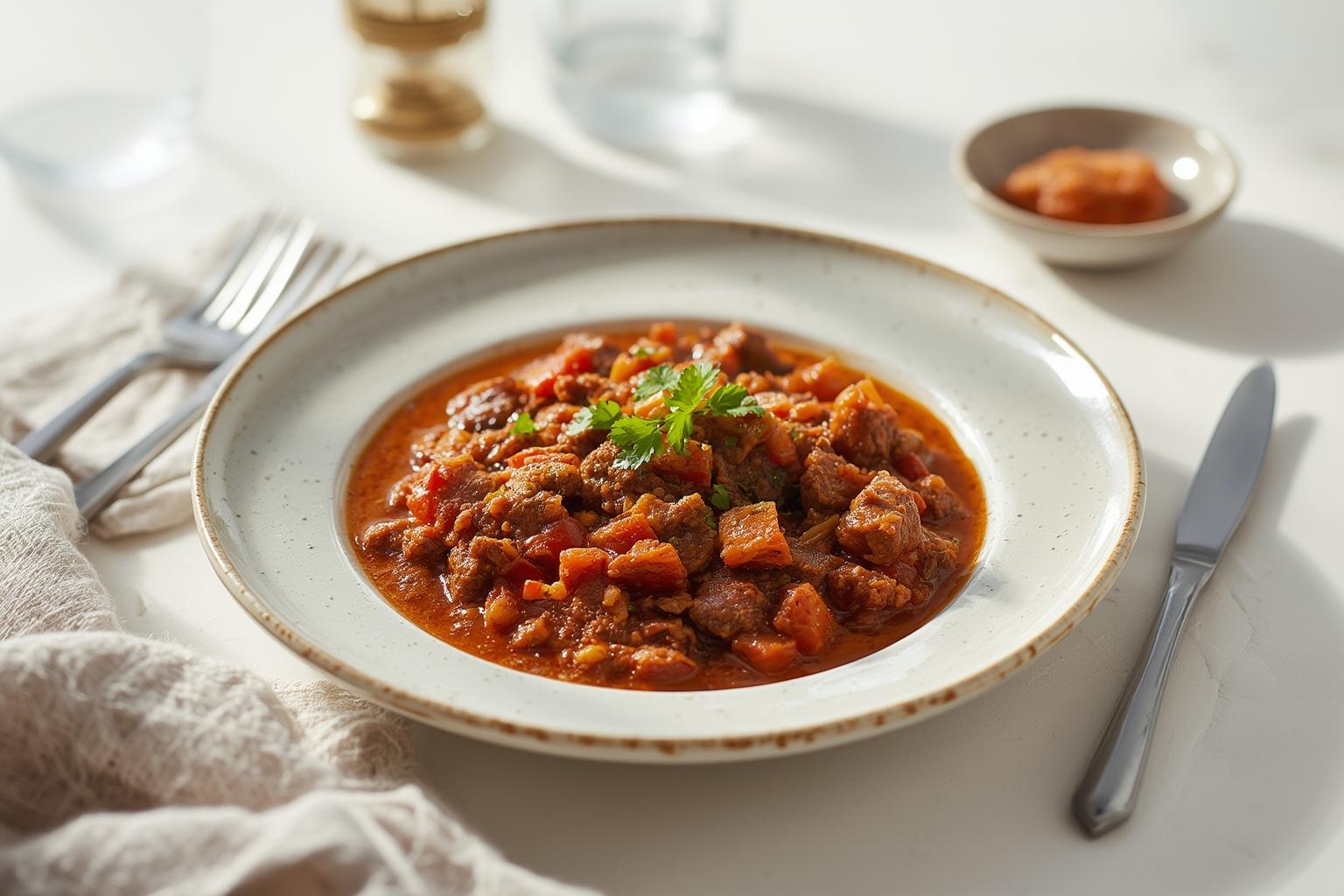
Even seasoned cooks can fall into traps when making chili. Here are the most common errors and how to avoid them:
1. Skipping the Sear: Throwing raw ground beef into the pot and immediately breaking it up results in steamed, grey meat. Always let the meat brown to develop deep, savory flavors (the Maillard reaction).
2. Burning the Garlic: Garlic cooks much faster than onions or peppers. Adding it too early or over high heat makes it bitter. Always add garlic last during the sautéing stage and lower the heat.
3. Under-seasoning Early: Spices need time to bloom. If you dump everything in at the very end, the chili will taste “flat” and raw. Blooming spices in oil (Step 4) is non-negotiable for great flavor.
4. Rushing the Simmer: Chili is better the next day. If you only simmer it for 20 minutes, the flavors won’t have time to meld. A low, slow simmer is essential for the perfect hearty beef chili.
5. Too Much Liquid: Chili should be thick, not soup. If you add too much broth, it dilutes the flavor. You can always add more liquid later, but it’s hard to take it out. Use the recommended amount and adjust as needed.
Storage / Maintenance Tips
Proper storage ensures your chili remains safe and delicious for future meals.
- Refrigeration: Allow the chili to cool to room temperature (within 2 hours of cooking). Transfer it to airtight containers. It will stay fresh in the fridge for up to 4 days.
- Freezing: Chili freezes exceptionally well. Portion it into freezer-safe bags or containers, leaving an inch of headspace for expansion. It will maintain quality for up to 3 months. Thaw overnight in the fridge before reheating.
- Reheating: The best way to reheat is on the stovetop over medium-low heat. Stir occasionally to prevent sticking. If the chili has thickened too much, add a splash of beef broth or water to loosen it up.
- Microwave: Place a portion in a microwave-safe bowl, cover loosely, and heat in 1-minute intervals, stirring in between to ensure even heating.
- Texture Preservation: When reheating frozen chili, avoid the microwave if possible. Stovetop heating helps maintain the texture of the beans and meat better than the intense, uneven heat of a microwave.
Conclusion
Creating a homemade pot of Beef Chili is more than just following a recipe; it is about creating a comforting, nutritious meal that brings people together. By selecting quality ingredients and allowing the flavors to develop slowly, you elevate a simple dish into something truly special. The ability to customize the spice level and ingredients makes this dish a staple in any kitchen. We hope you enjoy making this hearty beef chili as much as we do. Give it a try this weekend and let us know your favorite toppings in the comments below! Don’t forget to rate the recipe and share it with friends who appreciate a good bowl of comfort.
FAQs
1. Can I make this chili ahead of time?
Yes! In fact, chili often tastes better the next day as the flavors have more time to meld together. It is an excellent dish for meal prepping.
2. How can I make my chili less spicy?
To reduce the heat, omit the cayenne pepper entirely. You can also use mild chili powder or add more diced tomatoes and beans to dilute the spice level. Serving it with sour cream also helps cool the palate.
3. What is the best way to thicken a watery chili?
If your chili is too thin, you can simmer it uncovered for an additional 15–20 minutes to reduce the liquid. Alternatively, mash some of the beans against the side of the pot to release their starch, or stir in a tablespoon of masa harina or cornmeal.
4. Can I use fresh beans instead of canned?
Absolutely. If you have dried kidney beans, soak them overnight and boil them for at least 30 minutes before adding them to the chili (dried beans contain a toxin that is destroyed by boiling). Note that this will increase your prep time significantly.
5. What should I serve with beef chili?
Chili is versatile. It pairs perfectly with cornbread, tortilla chips, rice, or a simple green salad. For toppings, try shredded cheese, sour cream, jalapeños, onions, or avocado.