Ever find yourself craving that classic, messy, glorious sandwich from the Italian deli down the street? The kind where tender meatballs swim in robust marinara, sandwiched between toasted bread and smothered in melted cheese? Instead of waiting for delivery, you can create an even better version right in your own kitchen. Making this sandwich at home gives you total control over the ingredients—no mystery meats or overly salty sauces here. You’ll get maximum flavor, the perfect level of meltiness, and the satisfaction of a restaurant-quality meal without the restaurant price tag. There is nothing quite like a freshly made meatball sub to hit the spot for dinner.
Table of Contents
Materials & Supplies
To build this sandwich masterpiece, you need quality ingredients and reliable tools. Here’s your shopping list and kitchen inventory:
For the Meatballs:
- Ground Meat: 1 lb (450g) ground beef (80/20 blend is ideal for flavor and moisture). You can substitute with ground turkey or chicken for a leaner option, or use a mix of beef and pork for traditional richness.
- Breadcrumbs: 1/2 cup plain breadcrumbs (Panko works great for extra crunch). Alternatives: crushed crackers or stale bread soaked in milk.
- Binders: 1 large egg, 1/4 cup grated Parmesan cheese (the real stuff!), and 2 tbsp milk or water.
- Aromatics: 2-3 cloves garlic (minced), 1/4 cup fresh parsley (finely chopped), 1 small onion (finely diced or grated).
- Seasonings: 1 tsp dried oregano, 1 tsp salt, 1/2 tsp black pepper, 1/2 tsp red pepper flakes (optional for heat).
For the Assembly:
- Bread: 4-6 sturdy hoagie rolls or sub rolls (Italian or French bread works). Avoid soft sandwich bread; it will get soggy.
- Sauce: 2 cups of your favorite marinara sauce. Homemade is best, but a high-quality jarred sauce saves time.
- Cheese: 8 oz (about 2 cups) shredded mozzarella cheese (low-moisture works best for melting). Provolone is a great alternative or addition.
- Fat for Cooking: 2 tbsp olive oil (for searing) and 1 tbsp butter (for toasting bread).
Kitchen Tools:
- Large mixing bowl (for combining meat ingredients)
- Skillet or frying pan (oven-safe if you want to finish baking in it)
- Baking sheet (if baking meatballs separately)
- Tongs or spatula
- Knife and cutting board
- Measuring cups and spoons
- Small saucepan (for warming sauce)
- Aluminum foil (for covering sandwiches while melting cheese)
Timing / Cooking Schedule
- Prep Time: 15 minutes
- Cook Time: 25 minutes
- Total Time: 40 minutes
This recipe is incredibly weeknight-friendly. The active prep time is minimal—mostly mixing and forming. The cooking process is largely hands-off once the meatballs hit the heat. If you are meal prepping, you can make the meatballs ahead of time (up to 2 days in advance) and store them in the fridge, or freeze them raw for up to 3 months. Reheating is a breeze.
Step-by-Step Instructions
1. Mix the Meatball Base:
In a large mixing bowl, combine the ground meat, breadcrumbs, egg, Parmesan, milk, minced garlic, chopped parsley, oregano, salt, pepper, and red pepper flakes. Use your hands to mix gently until just combined. Tip: Do not overmix! Overworking the meat develops tough proteins, resulting in rubbery meatballs. Stop as soon as the ingredients are evenly distributed.
2. Form the Meatballs:
Roll the mixture into golf-ball-sized spheres (about 1.5 inches in diameter). You should get approximately 12-15 meatballs. Place them on a plate or baking sheet. Tip: Lightly oil your hands with olive oil to prevent the mixture from sticking to your fingers.
3. Cook the Meatballs:
Heat 2 tbsp olive oil in a large skillet over medium-high heat. Once the oil is shimmering, carefully add the meatballs in a single layer (do not overcrowd the pan; cook in batches if necessary). Sear them for about 2-3 minutes per side until they are deeply browned and crusty. Note: You are not cooking them all the way through at this stage—just developing flavor and color.
4. Simmer in Sauce:
Lower the heat to medium-low. Pour the marinara sauce into the skillet, gently nestling the meatballs into the liquid. If your skillet isn’t large enough, transfer the meatballs to a pot first. Cover and simmer for 15-20 minutes, or until the meatballs are cooked through (internal temperature reaches 160°F/71°C). For the best meatball sub sandwich, this simmering step infuses the sauce with meaty juices.
5. Toast the Bread:
While the meatballs simmer, preheat your oven broiler to high. Slice the hoagie rolls open lengthwise, but not all the way through. Spread butter on the cut sides and place them under the broiler for 1-2 minutes until golden and crisp. Watch closely—bread burns fast!
6. Assemble and Melt:
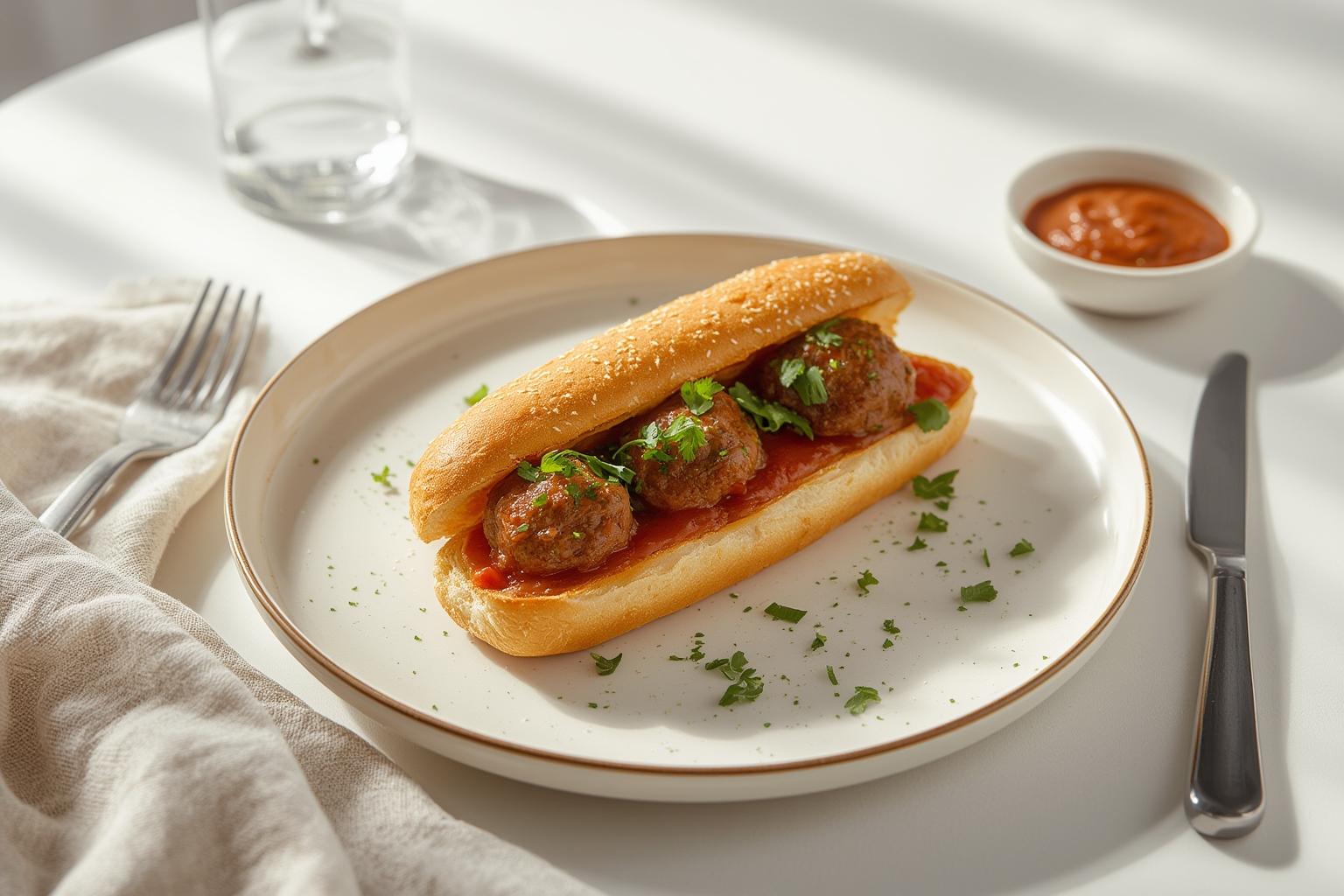
Place the toasted rolls on a baking sheet. Spoon a little extra sauce onto the bottom of each roll. Place 3-4 meatballs into each roll (squish them slightly to fit). Spoon more sauce over the top. Generously sprinkle with shredded mozzarella cheese.
7. Broil to Perfection:
Return the assembled subs to the broiler for 2-3 minutes, just until the cheese is bubbly, melted, and slightly browned in spots. Remove carefully (the bread will be hot!).
Nutritional Benefits / Advantages
While a meatball sub is undeniably a comfort food, cooking it at home offers distinct advantages over ordering out. By using fresh ground meat and real cheese, you avoid the preservatives and excessive sodium often found in fast-food versions. You can control the fat content by using leaner meats or adding finely chopped vegetables (like spinach or zucchini) to the meatball mix for extra nutrients.
Cooking at home is also more sustainable. You reduce food packaging waste by buying ingredients in bulk and using your own containers for leftovers. Furthermore, making this sandwich yourself is significantly more cost-effective. A batch of homemade meatballs costs a fraction of the price of a single restaurant sub, allowing you to feed a family for less while enjoying higher-quality food.
Tips, Alternative Methods, or Cooking Advice
- Oven-Baking: If you prefer not to stand at the stove, you can bake the meatballs. Preheat the oven to 400°F (200°C). Arrange seared or unseared meatballs on a baking sheet lined with parchment paper. Bake for 20 minutes, then toss them in the sauce to finish cooking on the stovetop or in the oven for another 10 minutes.
- Slow Cooker: Perfect for parties. Sear the meatballs first (for flavor), then place them in a slow cooker with the sauce. Cook on LOW for 4-6 hours.
- Small Kitchen Hack: If you don’t have a broiler, melt the cheese in a toaster oven or cover the assembled sub with foil and bake at 375°F until the cheese melts.
- Dietary Swaps: Use gluten-free breadcrumbs for a gluten-free option. For dairy-free, omit the Parmesan and use a vegan mozzarella alternative.
- Flavor Boost: Add a pinch of fennel seeds to the meat mixture for an authentic Italian sausage flavor profile.
Common Mistakes to Avoid
1. Using Too Lean Meat: Ground beef that is 90% lean or higher tends to dry out quickly. Stick to 80/20 or 85/15 for juicy results.
2. Overcrowding the Pan: When searing, leave space between the meatballs. Crowding lowers the pan’s temperature and causes the meatballs to steam rather than brown, sacrificing flavor.
3. Overmixing the Meat: As mentioned in step 1, this is the most common textural error. Mix gently and minimally.
4. Using Soft Bread: A flimsy hot dog bun will disintegrate under the weight of the meatballs and sauce. Sturdy bakery rolls are essential.
5. Skipping the Sear: While you can bake meatballs directly in the sauce, searing them first creates a Maillard reaction (browning) that adds a deep, savory complexity you can’t get from simmering alone.
Storage / Maintenance Tips
Refrigerating Leftovers:
Store leftover meatballs and sauce in an airtight container in the refrigerator for up to 4 days. It is best to store the meatballs submerged in the sauce to keep them moist. Do not store the assembled sandwiches, as the bread will become soggy.
Freezing:
Meatballs freeze beautifully. You can freeze them raw (on a baking sheet, then transfer to a bag) or cooked. If freezing cooked meatballs with sauce, let them cool completely, then store in freezer-safe containers or bags for up to 3 months. Thaw overnight in the fridge before reheating.
Reheating:
- Stovetop: Simmer gently in a saucepan over medium-low heat until heated through.
- Microwave: Place meatballs and a spoonful of sauce in a microwave-safe bowl. Cover loosely and heat in 30-second intervals, stirring in between, to ensure even heating.
- Texture Preservation: If the sauce has thickened in the fridge, add a splash of water or broth when reheating to loosen it up.
Conclusion
Mastering the homemade meatball sub is a game-changer for your dinner rotation. It transforms simple ingredients into a comforting, crowd-pleasing meal that rivals any deli or restaurant. By following these steps—searing for flavor, simmering for tenderness, and toasting the bread—you ensure a perfect bite every time. Don’t be intimidated; this recipe is forgiving and highly adaptable. We encourage you to give it a try this week. If you do, let us know how it turned out in the comments below, or share your own creative twists on this classic meatball sub sandwich!
FAQs
1. Can I make the meatballs ahead of time?
Yes! You can prepare the meatball mixture and shape them up to 24 hours in advance. Keep them covered in the refrigerator until ready to cook. Alternatively, freeze the raw meatballs on a baking sheet, then transfer to a freezer bag for up to 3 months. Cook from frozen, adding about 10 extra minutes to the simmer time.
2. Why are my meatballs falling apart?
This usually happens if you skip the binder (egg and breadcrumbs) or if you try to flip them too soon. Make sure to sear the first side until a solid crust forms before attempting to move them. If using very lean meat, ensure you have enough moisture (milk/water) and egg to bind it together.
3. What is the best bread for a meatball sub?
Italian sub rolls or hoagie rolls with a sturdy crust and soft interior are ideal. Avoid overly hard baguettes (which can hurt your mouth) or soft sandwich bread (which gets soggy). A slightly crusty sourdough roll also works well.
4. How do I prevent the sandwich from getting soggy?
Toast the bread! Buttering and toasting the inside of the roll creates a barrier against the sauce. Additionally, don’t over-sauce; you want the meatballs moist, but you don’t need to drown them. Lastly, assemble right before eating.
5. Can I use a different type of sauce?
Absolutely. While marinara is traditional, you can use a spicy arrabbiata sauce, a creamy tomato vodka sauce, or even a pesto-based sauce for a different flavor profile. Just ensure the sauce is loose enough to keep the meatballs tender.