Have you ever wondered why your meatloaf sometimes turns out dry or bland, even when you follow a recipe? Making a truly memorable meatloaf is about more than just mixing ground meat and baking it; it’s about understanding the balance of flavors, textures, and the right technique to keep it juicy and tender. A delicious, homemade Meatloaf offers a comforting taste that rivals any restaurant. For many, nothing beats a slice of classic american meatloaf straight from the oven. This guide will teach you everything you need to know to master this home-cooked staple, ensuring a flavorful, moist result every time.
Table of Contents
Materials & Supplies
Before you begin, gather all your ingredients and tools. Having everything ready makes the cooking process smooth and enjoyable.
Ingredients:
- Ground Meat: A mix of 1.5 lbs (680g) ground beef (80/20 or 85/15 fat ratio) and 0.5 lb (225g) ground pork. The pork adds necessary fat and moisture.
- Aromatics:
* 1 medium yellow onion, finely diced
* 3 cloves garlic, minced
* 1 celery stalk, finely diced (optional, but adds great flavor)
* 1 carrot, finely grated (optional, adds sweetness and moisture)
- Breadcrumbs: 1 cup of Panko or regular breadcrumbs (or rolled oats for a gluten-free option).
- Eggs: 2 large eggs, lightly beaten (helps bind the mixture).
- Liquid: 1/2 cup milk (or beef broth/unsweetened almond milk for dairy-free).
- Seasonings:
* 1 tbsp Worcestershire sauce
* 1 tsp dried thyme
* 1 tsp dried oregano
* 1 tsp smoked paprika
* 1 tsp salt (plus more for seasoning)
* 1/2 tsp black pepper
- Glaze (Topping):
* 1/2 cup ketchup
* 2 tbsp brown sugar
* 1 tbsp apple cider vinegar
* 1 tsp Worcestershire sauce
Kitchen Tools:
- Large Mixing Bowl: For combining ingredients without spilling.
- Cast Iron Skillet or Loaf Pan: 9×5 inch loaf pan for baking; cast iron gives a nice crust.
- Cutting Board and Chef’s Knife: For chopping vegetables.
- Measuring Cups and Spoons: For accuracy.
- Spatula or Spoon: For mixing.
- Baking Sheet: If using the free-form method (recommended for crust).
Timing / Cooking Schedule
- Prep Time: 20 minutes
- Cook Time: 55–60 minutes
- Resting Time: 10 minutes
- Total Time: Approximately 1 hour 30 minutes
This recipe is perfect for a Sunday dinner or meal prep. While it requires about 20 minutes of active prep, the oven does the heavy lifting, making it relatively hands-off. It fits well into a weekly cooking routine, providing leftovers for sandwiches or salads the next day.
Step-by-Step Instructions
1. Preheat and Prep:
Preheat your oven to 350°F (175°C). If you are using a loaf pan, lightly grease it with oil or cooking spray. If you prefer a crispy crust all around (my preferred method), line a baking sheet with parchment paper or foil. This free-form shape allows heat to circulate evenly.
2. Sauté Aromatics:
In a small skillet over medium heat, add a tablespoon of olive oil. Sauté the diced onion and celery (and grated carrot) for about 5–7 minutes until softened. Add the minced garlic and cook for another minute until fragrant. Remove from heat and let cool slightly. Tip: Cooking the veggies first releases their sweetness and prevents a crunchy texture in the finished meatloaf.
3. Mix the Binder:
In a small bowl, combine the breadcrumbs and milk (or broth). Let it sit for 5 minutes to soak up the liquid. This “panade” is the secret to a moist meatloaf, preventing the protein from tightening too much and squeezing out moisture.
4. Combine the Meat Mixture:
In your large mixing bowl, add the ground beef and ground pork. Add the cooled sautéed vegetables, the soaked breadcrumbs, the beaten eggs, Worcestershire sauce, thyme, oregano, smoked paprika, salt, and pepper.
5. Mix Gently:
Using your hands or a spatula, mix everything together until just combined. Do not overwork the meat, as this creates a dense, rubbery texture. The mixture should look uniform but loose. Tip: Wear disposable gloves for easier cleanup.
6. Form the Loaf:
Transfer the meat mixture to your prepared baking sheet or loaf pan. If baking free-form, shape it into a rectangular loaf about 9×5 inches. If using a pan, press the mixture firmly into the corners. This prevents air pockets and ensures even cooking.
7. Make the Glaze and Bake:
Whisk together the ketchup, brown sugar, apple cider vinegar, and Worcestershire sauce. Spread half of the glaze evenly over the top of the meatloaf. Bake for 40 minutes.
8. Glaze Again and Finish:
Remove the meatloaf from the oven and spread the remaining glaze over the top. Return to the oven and bake for another 15–20 minutes, or until the internal temperature reaches 160°F (71°C) in the center. This is where knowing how to make a Meatloaf that stays juicy comes in—don’t overcook it!
9. Rest Before Slicing:
Let the meatloaf rest on the counter for at least 10 minutes before slicing. This allows the juices to redistribute throughout the loaf. Slicing too early will cause the juices to run out, leaving you with a dry result. A perfect slice of classic american meatloaf relies on this patience.
10. Slice and Serve:
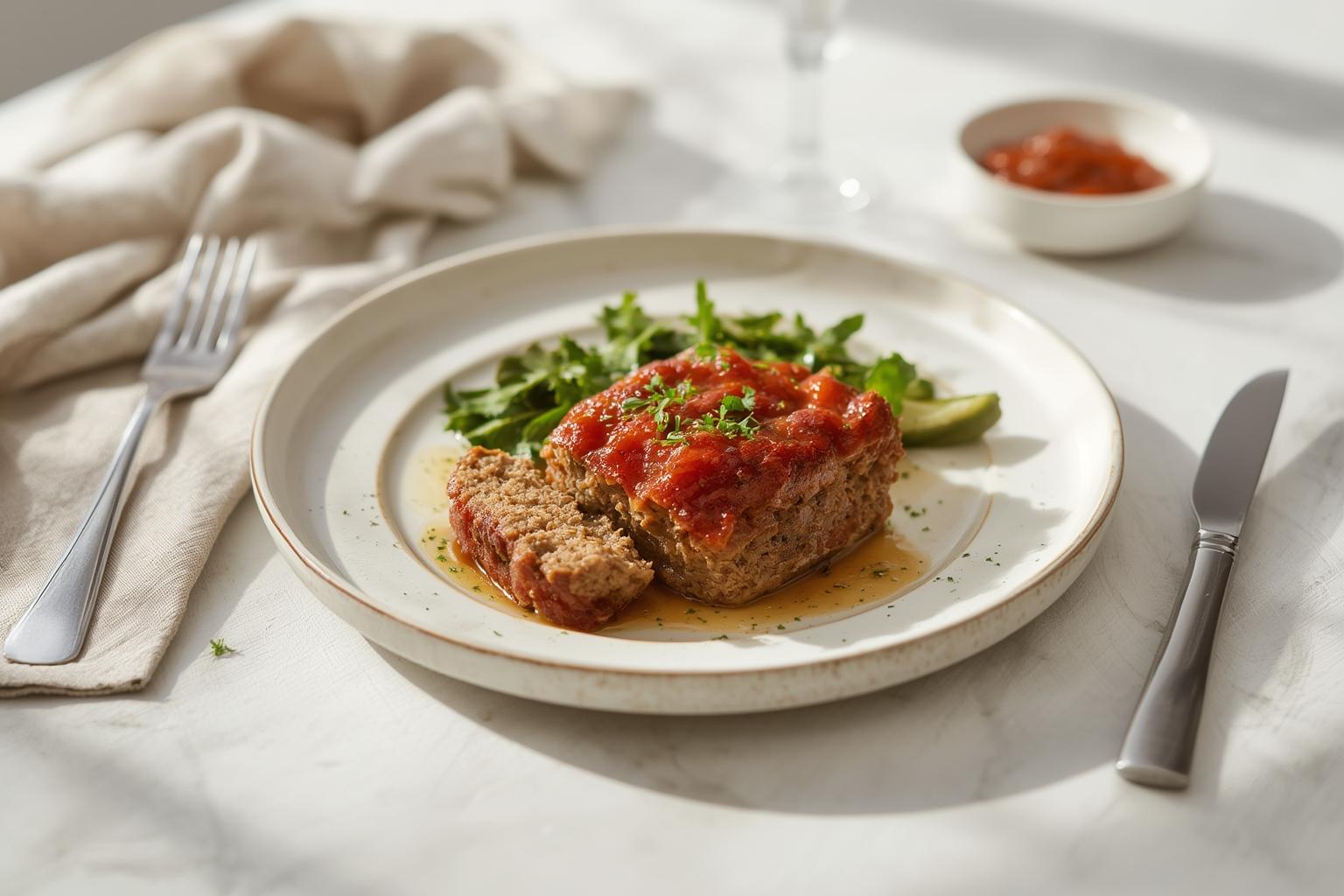
Use a sharp serrated knife to cut thick slices. Serve warm with mashed potatoes and green beans.
Nutritional Benefits / Advantages
Cooking this recipe at home offers significant advantages over store-bought versions or fast food. First, you control the ingredients completely, allowing you to reduce sodium and avoid preservatives, fillers, and artificial additives often found in pre-packaged meatloaves. Using a mix of beef and pork provides a good source of protein, iron, and essential B vitamins necessary for energy levels.
By adding finely grated vegetables like carrots and onions, you sneak in extra fiber and vitamins without compromising flavor. Furthermore, making a large batch is cost-effective; ground meat is often affordable, especially when bought in bulk, and the meal stretches across multiple servings. Home cooking also reduces packaging waste compared to buying frozen dinners, contributing to a more sustainable kitchen.
Tips, Alternative Methods, or Cooking Advice
- Alternative Cooking Methods:
* Air Fryer: Shape the mixture into smaller loaves or patties. Air fry at 350°F for 15–20 minutes, checking internal temperature.
* Slow Cooker: Line the slow cooker with parchment paper. Cook on low for 4–6 hours. The texture will be softer and more steamed.
* Stovetop (Skillet): Form into burger patties and pan-sear in a cast-iron skillet until cooked through, then top with glaze and cover to melt.
- Dietary Swaps:
* Gluten-Free: Use certified gluten-free breadcrumbs or rolled oats.
* Low Carb: Replace breadcrumbs with crushed pork rinds or almond flour.
* Dairy-Free: Use unsweetened almond milk or beef broth in the panade.
- Small Kitchen Tip: If you don’t have a food processor for the veggies, buy pre-diced onions or grate the onion on a box grater. This hides the veggies completely for picky eaters.
Common Mistakes to Avoid
1. Using Meat That Is Too Lean: A common mistake is buying 90% or 95% lean ground beef. Fat equals flavor and moisture. Stick to 80/20 or 85/15.
2. Skipping the Sauté: Putting raw onions directly into the meatloaf can result in a harsh, crunchy texture and released water that makes the loaf fall apart. Always cook your vegetables first.
3. Overmixing: Treating the mixture like dough will result in a tough, bouncy texture. Mix just until combined.
4. Forgetting the Panade: Without the breadcrumb/milk mixture, the protein bonds tighten too much, squeezing out moisture. This is non-negotiable for a moist loaf.
5. Not Checking Temperature: Guessing doneness leads to overcooked, dry meat. Use an instant-read thermometer.
Storage / Maintenance Tips
- Refrigeration: Allow the meatloaf to cool completely before storing. Place leftovers in an airtight container or wrap tightly in foil/plastic wrap. It will stay fresh in the fridge for up to 4 days.
- Freezing: Meatloaf freezes exceptionally well. You can freeze it whole, sliced, or as unbaked raw mixture (wrapped tightly in plastic and foil). To freeze cooked, cool it first, then wrap slices individually. It will last up to 3 months in the freezer.
- Reheating: To keep the meatloaf moist when reheating, add a splash of beef broth or water to the bottom of the dish, cover with foil, and heat in a 300°F oven for 15–20 minutes. For a single slice, the microwave works (covered with a damp paper towel), but the oven retains the best texture. Avoid high heat, which dries out the meat.
Conclusion
Mastering the art of a moist, flavorful meatloaf is a rewarding skill for any home cook. By combining the right meat ratios, using a panade, and baking with a sweet-and-tangy glaze, you can create a meal that comforts and satisfies. This recipe proves that the humble Meatloaf doesn’t have to be boring; it can be the star of your dinner table. Whether you are a seasoned chef or just starting out, this classic american meatloaf is a timeless dish worth mastering. Give it a try this week and let us know how it turns out in the comments below!
FAQs
1. Why did my meatloaf fall apart?
This usually happens if you skip the binder (eggs and breadcrumbs) or slice it before letting it rest. The resting period is crucial for the structure to set.
2. Can I make this meatloaf ahead of time?
Yes! You can assemble the loaf (uncooked) and store it in the fridge for up to 24 hours before baking. You may need to add 5–10 minutes to the baking time if cooking straight from the fridge.
3. What is the best internal temperature for meatloaf?
For ground beef, the USDA recommends 160°F. If using ground turkey or chicken, aim for 165°F. Always check the thickest part with a digital thermometer.
4. Can I use a different meat?
Absolutely. Ground turkey, chicken, or even lamb can be used. Turkey and chicken are leaner, so be sure to add extra fat (like olive oil) or moisture to prevent dryness.
5. Is it better to cook in a loaf pan or free-form?
Free-form on a baking sheet is generally better because it allows the fat to drip away and creates a crust on all sides. A loaf pan steams the meat, resulting in a softer texture, though it keeps the shape perfectly.