Is your countertop starter creating a pile of sourdough discard?
Turn Sourdough Discard Pretzels into Delicious, Salty Pretzels: The Ultimate Recipe
Before you toss it in the compost, let’s transform that tangy byproduct into a savory, chewy bakery treat. Baking with sourdough discard is one of the best ways to reduce food waste while unlocking deep flavor in baked goods. There is nothing quite like the satisfaction of pulling warm, salt-dusted pretzels from your own oven, knowing you made them from scratch with ingredients you likely already have.
For sourdough bakers, finding a reliable, fast way to use up starter discard is a weekly ritual. This recipe offers the perfect solution: soft on the inside, crisp on the outside, and packed with that signature fermented tang. Whether you are a seasoned baker or just starting your sourdough journey, making Sourdough Discard Pretzels is a game-changer for your snack rotation. It yields genuine soft sourdough pretzels without the hassle of a complicated lye bath or all-day fermentation.
Table of Contents
MATERIALS & SUPPLIES
Gathering the right ingredients and tools is the first step to pretzel perfection. Because this dough is a bit sticky, having everything measured and ready makes the process smooth and enjoyable.
Ingredients
- Sourdough Discard (120g): Your discard should be unfed and at room temperature. This adds acidity and flavor while utilizing waste.
- Warm Water (110°F): Approximately ½ cup. This helps activate the yeast and brings the dough together.
- Active Dry Yeast (2 ¼ tsp): One standard packet. Even though we aren’t doing a long rise, yeast gives the pretzels their classic lift.
- Brown Sugar (1 tbsp): Food for the yeast and adds a subtle sweetness to balance the sour tang.
- All-Purpose Flour (3 cups): Spooned and leveled. You may need a little extra for dusting your work surface.
- Unsalted Butter (2 tbsp): Melted. Adds richness and softness to the crumb.
- Coarse Sea Salt: For topping. Don’t use fine table salt, or it will dissolve instantly.
For the Baking Soda Bath
- Water (6 cups): For the pot.
- Baking Soda (½ cup): This is the secret to that deep brown, chewy crust. It mimics the professional lye bath.
Kitchen Tools
- Large Mixing Bowl: For combining ingredients.
- Stand Mixer (Optional): Makes kneading easier, but you can mix by hand with a sturdy wooden spoon.
- Dough Scraper: Helpful for handling sticky dough.
- Large Pot or Dutch Oven: Wide enough to boil 2-3 pretzels at a time without crowding.
- Slotted Spoon or Spider Strainer: To safely lift pretzels out of the hot water bath.
- Baking Sheet lined with Parchment Paper: Prevents sticking and makes cleanup easy.
- Pastry Brush: For the egg wash (optional, but helps salt adhere).
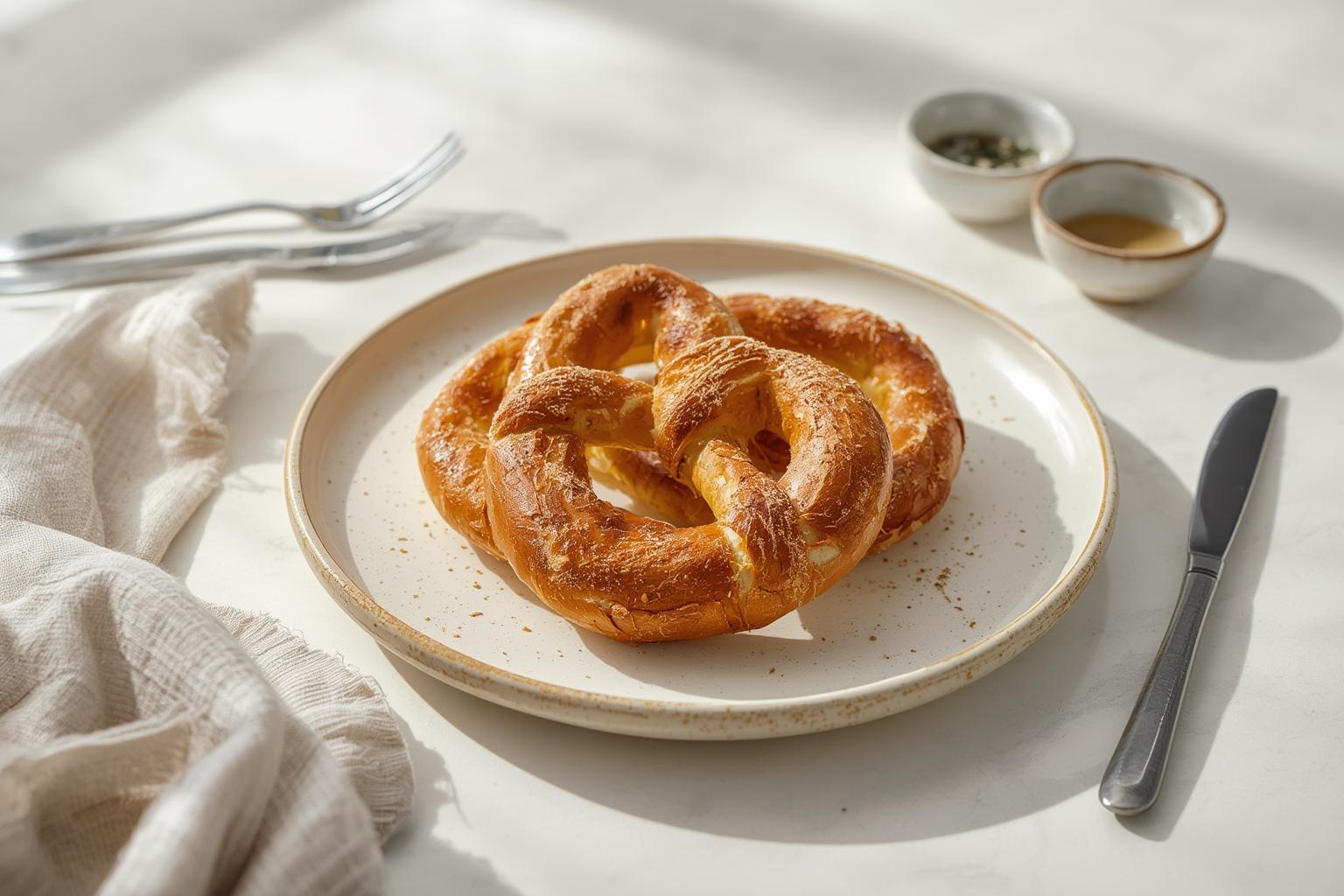
TIMING / COOKING SCHEDULE
These pretzels are surprisingly quick to whip up, making them perfect for a weekend baking session or even a weeknight treat if you plan ahead.
- Prep Time: 20 minutes (plus 15–20 minutes rising time)
- Cook Time: 12–15 minutes
- Total Time: ~50 minutes
Schedule Note: This is a “short rise” recipe. Unlike standard sourdough which takes hours or days, the yeast in this recipe does the heavy lifting, allowing the dough to become workable in under half an hour. It is very weeknight-friendly!
STEP-BY-STEP INSTRUCTIONS
- Activate the Yeast: In your large mixing bowl (or stand mixer bowl), combine the warm water, brown sugar, and active dry yeast. Give it a quick stir and let it sit for 5 minutes until it becomes foamy. This proves your yeast is alive and ready to work.
- Combine Wet Ingredients: Stir in the sourdough discard and melted butter until well combined. The discard will break up into the liquid.
- Add Flour: Gradually add the flour, mixing until a shaggy dough forms. If using a stand mixer, switch to the dough hook and knead on low speed. If mixing by hand, turn the dough out onto a lightly floured surface and knead for 5–7 minutes. The dough should be smooth and elastic, but not overly dry. Tip: If the dough feels too sticky, add flour one tablespoon at a time, but try to keep it slightly tacky for the best texture.
- First Rise: Place the dough in a lightly oiled bowl, cover with a damp towel or plastic wrap, and place in a warm spot. Let it rise for 15–20 minutes until it has puffed up slightly.
- Shape the Pretzels: Divide the dough into 8–10 equal pieces. Roll each piece into a rope about 18–20 inches long. To form the classic pretzel shape: Make a “U” with the rope, cross the ends over each other twice, then bring the ends down to the bottom of the “U” and press gently to seal.
- Prepare the Bath: Preheat your oven to 425°F (220°C). Bring your large pot of water to a rolling boil. Carefully and slowly add the baking soda—it will foam up significantly, so add it slowly to prevent overflow. Reduce heat slightly to maintain a simmer.
- Boil the Pretzels: Drop pretzels into the bath 2 or 3 at a time. Boil for 30 seconds per side. Use your slotted spoon to remove them, letting excess water drip off, and place them back on your parchment-lined baking sheet. This step creates the signature chewy crust. If you want soft sourdough pretzels, stick to 30 seconds per side; for a chewier bite, go up to 45 seconds. This technique is the secret behind perfect Sourdough Discard Pretzels.
- Bake: Sprinkle generously with coarse sea salt immediately after boiling (the salt sticks best when the pretzels are wet). Bake for 12–14 minutes, or until deep golden brown.
- Cool and Serve: Let them cool on the baking sheet for 2 minutes, then transfer to a wire rack. These are best eaten warm with butter or mustard.
NUTRITIONAL BENEFITS / ADVANTAGES
While pretzels are an indulgent treat, making them at home offers significant advantages over store-bought varieties. First, you have total control over the ingredients. By using sourdough discard, you are incorporating naturally fermented flour, which contains organic acids that may aid digestion and lower the glycemic index slightly compared to commercial yeast breads.
Additionally, you avoid the preservatives and dough conditioners often found in mass-produced soft pretzels. This recipe is a great way to practice sustainability in the kitchen; you are upcycling a byproduct of your sourdough baking routine that might otherwise be thrown away. From a cost perspective, flour and yeast are incredibly inexpensive, meaning you can enjoy bakery-style snacks for a fraction of the price of buying them from a shop.
TIPS, ALTERNATIVE METHODS, OR COOKING ADVICE
- Flavor Variations: Don’t be afraid to experiment! Mix garlic powder, onion powder, or dried herbs (like rosemary or thyme) directly into the flour before mixing. Alternatively, brush the boiled pretzels with melted butter and sprinkle with cinnamon sugar for a sweet version.
- Air Fryer Method: If you want to save energy or avoid heating up the kitchen, you can air fry the pretzels after the boiling step. Brush with an egg wash or melted butter, air fry at 375°F for 8–10 minutes, flipping halfway through.
- Cheese Sauce: A simple homemade cheese sauce is the perfect accompaniment. Melt butter, whisk in flour, add milk, and stir in shredded sharp cheddar until smooth.
- Sticky Dough Hack: If your dough is sticking to your hands during shaping, rub a little oil on your hands rather than adding more flour. Too much flour makes the pretzels dense.
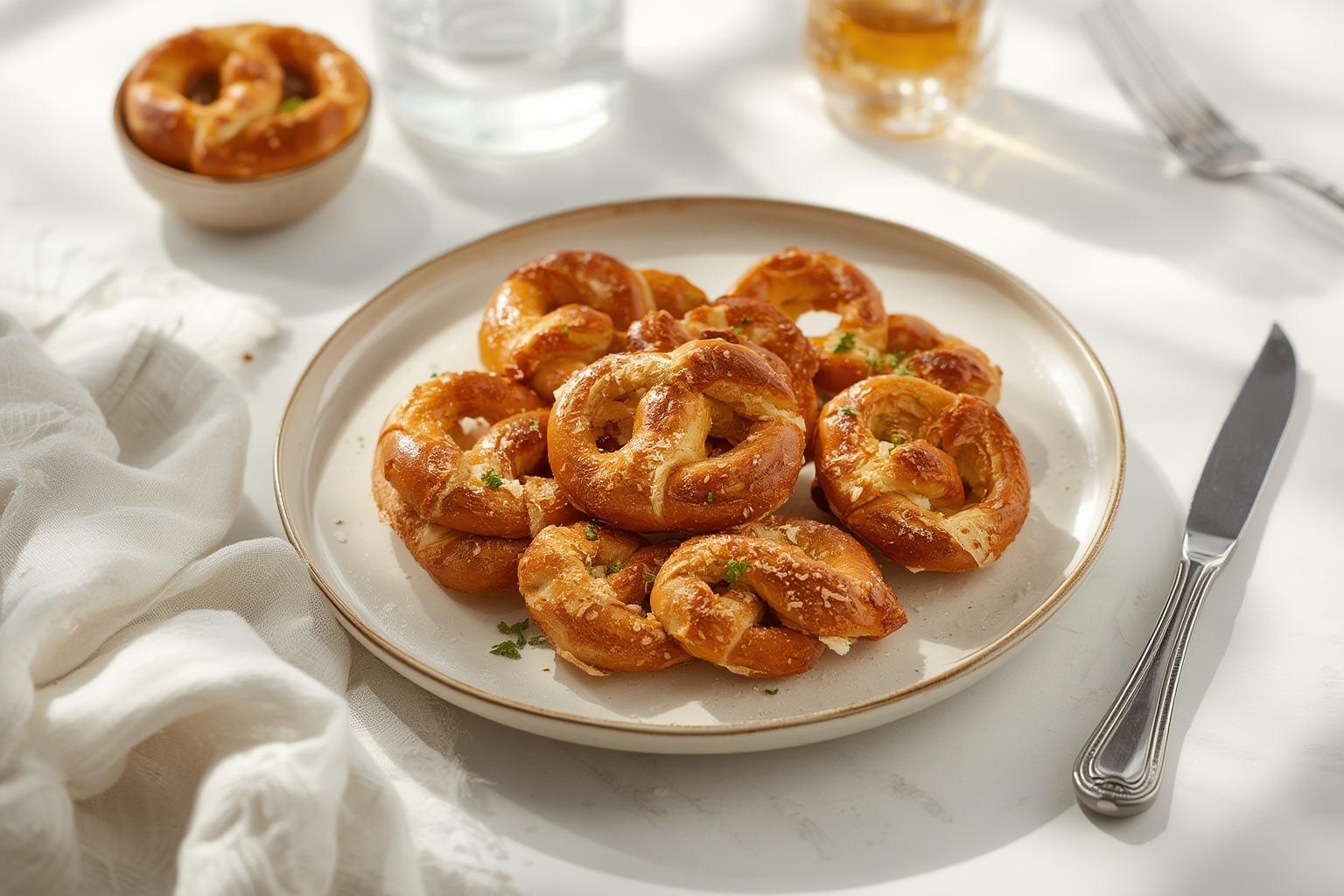
COMMON MISTAKES TO AVOID
- Skip the Boil at Your Peril: Some beginners think boiling is optional. It is not! Boiling in the alkaline baking soda bath is what gives the pretzel its distinct flavor, dark color, and chewy crust. Without it, you just have baked bread ropes.
- Water Too Hot/Cold: If your water is boiling vigorously, it can tear the delicate pretzels. Keep it at a gentle simmer. Conversely, if you don’t boil them long enough, the crust won’t set properly.
- Overcrowding the Pot: Boil pretzels in small batches. If you add too many, the water temperature will drop, and they will stick together, resulting in a mushy texture.
- Rushing the Rise: Even though the rise is short, don’t skip it. That 15-minute window allows the gluten to relax, making the dough easier to roll into ropes without shrinking back.
STORAGE / MAINTENANCE TIPS
Pretzels are best enjoyed the day they are made, but leftovers store beautifully if handled correctly.
- Room Temperature: Store cooled pretzels in an airtight container or zip-top bag for up to 2 days. To restore some softness, pop them in the microwave for 10–15 seconds with a damp paper towel.
- Freezing: These freeze perfectly. Wrap each pretzel individually in plastic wrap and place them in a freezer bag. They will keep for up to 3 months. Thaw at room temperature or reheat directly from frozen.
- Reheating: For the best texture, reheat pretzels in an oven or toaster oven at 350°F for 5–8 minutes. This revives the crispy exterior much better than a microwave.
CONCLUSION
There is truly nothing like the aroma of fresh pretzels wafting through your home. By using your sourdough discard, you are not just baking a snack; you are participating in a cycle of resourcefulness and flavor that elevates home cooking. This recipe proves that you don’t need complicated techniques or hours of free time to create something delicious and memorable.
We hope you enjoy the process and the result as much as we do. Give these Sourdough Discard Pretzels a try this weekend! Once you taste the difference of homemade soft sourdough pretzels, you might never buy store-bought again. Let us know in the comments how they turned out for you, or share your favorite dipping sauce pairing!
FAQs
1. Can I make these pretzels gluten-free?
Yes, you can try a 1-to-1 gluten-free baking flour blend, but the texture will be more delicate and less chewy. Ensure your sourdough discard is also from a gluten-free starter.
2. Do I have to use the baking soda bath?
Technically, you can skip it, but the result will be a standard soft bread stick rather than a pretzel. The baking soda is essential for that classic pretzel taste and look.
3. My dough is too dry/sticky. What should I do?
Sourdough discard hydration can vary. If it’s too dry, add warm water a teaspoon at a time. If it’s too sticky, add flour a tablespoon at a time until it is manageable but still soft.
4. Can I use instant yeast instead of active dry?
Yes, you can substitute instant yeast. You can skip the proofing step (step 1) and mix it directly with the flour, though the rise might happen a bit faster.
5. How do I get a shiny crust?
For a shiny, golden crust, brush the boiled pretzels with a beaten egg (egg wash) before sprinkling salt and baking. For a vegan option, brush with melted butter or olive oil.