If you’ve ever stood in front of a sticky, saucy rack of BBQ Ribs at a summer barbecue and wondered, “Can I actually make these at home?”—the answer is a resounding yes! Many home cooks avoid making ribs because they seem intimidating, but with the right technique, patience, and a few simple ingredients, you can achieve restaurant-quality results right in your own oven.
Homemade BBQ Ribs offer superior flavor and texture compared to takeout. You control the quality of the meat, the sweetness of the sauce, and exactly how much seasoning goes on. Plus, it’s far more cost-effective to cook a full rack at home. Whether you’re planning a weekend feast or just craving something savory, this guide will walk you through every step to make succulent, tender bbq ribs that truly melt in your mouth.
Table of Contents
Materials & Supplies
Gathering your ingredients and tools beforehand makes the cooking process smooth and enjoyable. Here’s everything you need to create this crowd-pleaser.
Ingredients & Seasonings
-
- 1 rack of pork ribs: Baby back ribs (more tender, faster cooking) or St. Louis-style spareribs (meatier, larger) work best.
- Dry Rub:
- 2 tablespoons brown sugar (light or dark)
- 1 tablespoon smoked paprika
- 1 teaspoon garlic powder
- 1 teaspoon onion powder
- 1 teaspoon salt (adjust to taste)
- ½ teaspoon black pepper
- ½ teaspoon chili powder (optional for heat)
- ¼ teaspoon cumin (optional for earthiness)
- Liquid for Braising: ½ cup apple juice, apple cider vinegar, or beer (helps tenderize and keeps meat moist).
- BBQ Sauce: 1 to 1½ cups of your favorite store-bought or homemade sauce. Choose a flavor profile you love—sweet, tangy, or spicy.
- Oil: 1 tablespoon olive oil or vegetable oil (to help the rub adhere).
Kitchen Tools
- Heavy-duty aluminum foil: Essential for the braising/steaming step.
- Rimmed baking sheet or roasting pan: To catch drips and hold the foil packet.
- Basting brush: For applying sauce.
- Sharp knife: For trimming excess fat or silver skin if necessary.
- Cutting board: For resting and slicing.
- Measuring spoons and cups: For accuracy.
- Mixing bowl: To combine dry rub ingredients.
- Meat thermometer (optional but recommended): To check for doneness (target temp is 190°F-203°F).
Timing / Cooking Schedule
BBQ ribs are a labor of love, but most of the time is hands-off. This schedule is for Baby Back Ribs. St. Louis style may need an extra 30 minutes in the oven.
- Prep Time: 20 minutes (trimming, mixing rub, applying).
- Cook Time: 2.5 to 3 hours (mostly baking covered, plus broiling).
- Total Time: Approx. 3 to 3.5 hours.
Note: If you are using a slow cooker or pressure cooker, the active time remains the same, but the cooking time will vary (see tips section).
Step-by-Step Instructions
Follow these steps precisely for ribs that are easy to pull apart but hold their shape until you bite into them. We will bake them covered to steam and tenderize, then uncover to caramelize the sauce.
- Preheat and Prep: Preheat your oven to 300°F (150°C). Line a large baking sheet with heavy-duty foil (double layer if the foil is thin). Remove the thin membrane from the back of the ribs if the butcher hasn’t already done so; this allows flavors to penetrate and prevents chewiness.
- Apply the Rub: Pat the ribs dry with paper towels. Lightly coat the meat side with oil. In a small bowl, mix your dry rub ingredients. Generously sprinkle the rub over the meat, pressing it gently so it adheres. Let it sit for 15-20 minutes at room temperature.
- Wrap for Baking: Place the ribs meat-side up on the foil-lined sheet. Pour the braising liquid (apple juice/cider) into the pan (not directly on the ribs, but around them). Bring the foil up and around the ribs to create a tight packet. Seal the edges well to trap the steam—this is the secret to tender bbq ribs.
- Bake Low and Slow: Place the pan in the oven. Bake for 2 to 2.5 hours. The meat should be tender and pulling away from the bone slightly. If using a thermometer, the internal temperature should be around 190°F.
- Unwrap and Sauce: Carefully open the foil packet (watch for hot steam). Remove the ribs from the oven. Drain the excess liquid from the pan. Brush a generous layer of BBQ sauce over the top of the ribs.
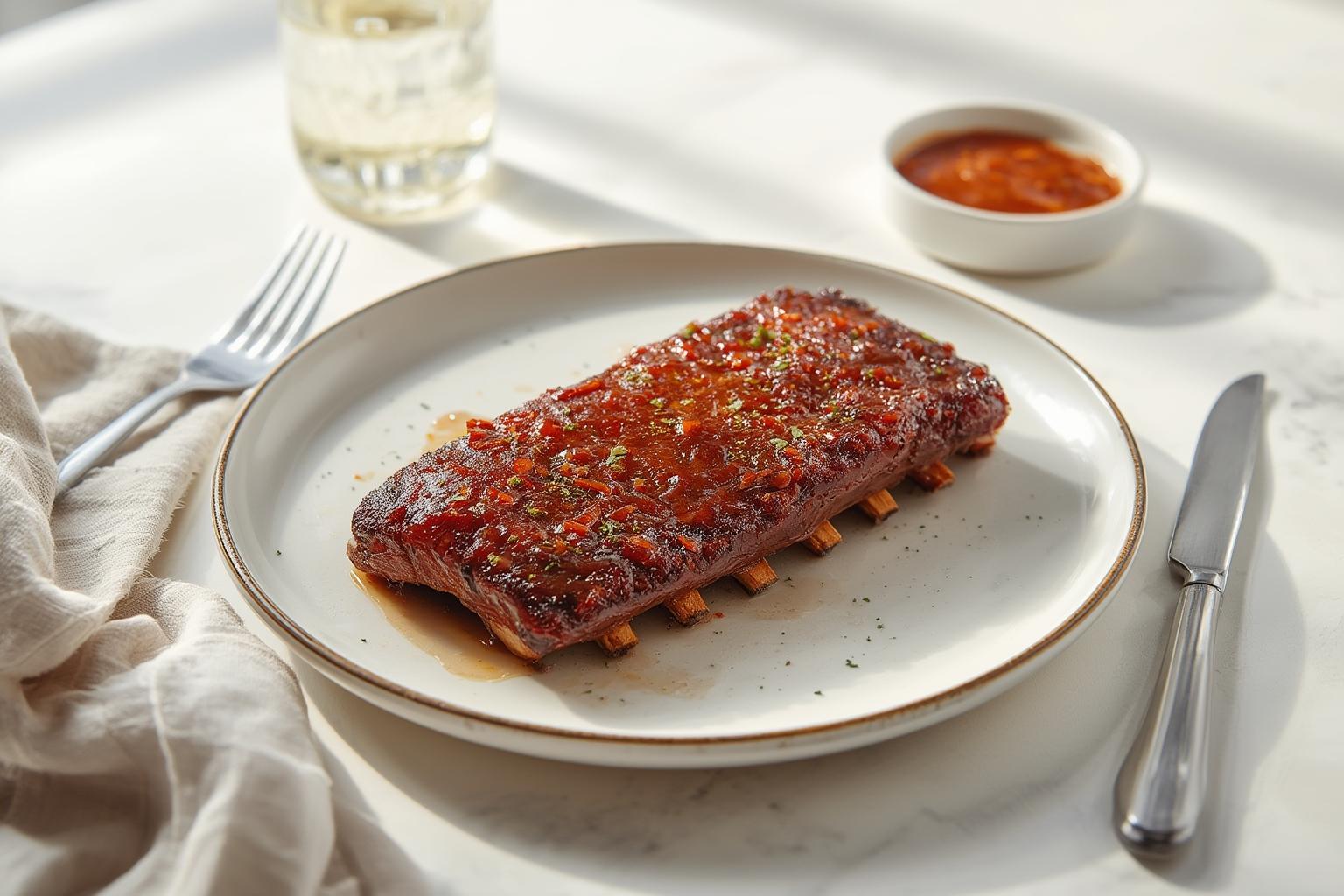
- Caramelize: Increase the oven temperature to 400°F (200°C). Return the uncovered ribs to the oven for 10-15 minutes. Watch closely to ensure the sauce caramelizes without burning. BBQ Ribs taste best when the sauce is sticky and slightly charred in spots.
- Rest and Slice: Remove from the oven and let the ribs rest for 10 minutes before slicing. This allows the juices to redistribute. Slice between the bones and serve immediately.
Nutritional Benefits & Advantages
Cooking this recipe at home offers several advantages over dining out.
- Freshness: You control the age and quality of the pork, ensuring a fresh taste that frozen or reheated restaurant ribs often lack.
- Ingredient Control: By making your own rub and choosing the sauce, you can reduce sodium and avoid preservatives or high-fructose corn syrup common in many commercial products.
- Cost Savings: A rack of pork ribs costs significantly less at the grocery store than at a barbecue joint. You can feed a family for a fraction of the price.
- Sustainability: Buying a whole rack reduces packaging waste compared to pre-packaged individual portions. Using home pantry staples for the rub also minimizes waste.
Tips, Alternative Methods, or Cooking Advice
Not everyone has the same kitchen setup, so here are some flexible options:
- Slow Cooker: Season the ribs as directed, place them standing up or coiled around the slow cooker (cut into smaller segments if needed). Pour ½ cup of liquid over them and cook on Low for 6-8 hours or High for 3-4 hours. Finish under the broiler with sauce to caramelize.
- Pressure Cooker (Instant Pot): Cut the rack into thirds to fit. Add 1 cup of liquid (water or broth). Cook on High Pressure for 25-30 minutes (for baby backs) or 35-40 minutes (for spareribs). Quick release or natural release. Transfer to a baking sheet and broil with sauce.
- Grill/Smoker: Use the same rub. Grill over indirect heat at 275°F for 2-3 hours, adding wood chunks for smoke. Brush with sauce in the last 20 minutes.
- For Small Kitchens: If you lack a large baking sheet, you can create a foil packet on a smaller sheet or even use a baking dish with a lid, though airflow for caramelization will be limited in the final step.
- Troubleshooting:
- Too Salty: Use a low-sodium sauce next time; balance with a sweet glaze.
- Too Dry: Ensure your foil packet is sealed tight. Add more braising liquid if needed.
- Sauce Too Thick: Thin it out with a splash of apple juice or water before applying.
Common Mistakes to Avoid
Avoid these pitfalls to ensure your ribs turn out perfect every time:
- Skipping the Membrane Removal: The tough membrane on the bone side blocks flavor and creates a chewy texture. Always remove it for the best eating experience.
- Cooking at Too High a Temperature: Ribs require low heat to break down connective tissue. High heat will make them tough and rubbery before they have a chance to tenderize.
- Applying Sauce Too Early: BBQ sauce usually contains sugar (molasses, honey, corn syrup). If applied at the start, it will burn and turn bitter. Always apply sauce during the last 15-20 minutes of cooking.
- Not Resting the Meat: Cutting immediately after cooking causes the juices to run out, leaving the meat dry. Letting them rest allows the fibers to reabsorb moisture.
Storage & Maintenance Tips
- Refrigeration: Store leftover ribs in an airtight container or wrap tightly in foil. They will stay fresh in the fridge for 3-4 days.
- Freezing: For longer storage, wrap individual portions in foil, then place in a freezer bag. They can last up to 3 months. Thaw overnight in the fridge before reheating.
- Reheating: To maintain texture, avoid the microwave if possible.
- Oven Method (Best): Wrap ribs in foil with a splash of water or broth. Bake at 300°F for 15-20 minutes until warm. Unwrap and broil briefly to crisp the sauce.
- Stovetop: Heat a non-stick pan over medium-low heat. Add a splash of water and the ribs. Cover and steam gently until heated through.
Conclusion
Making BBQ Ribs at home is easier than it looks, provided you respect the “low and slow” cooking method. By following these steps, you avoid the common pitfalls of dry or tough meat and end up with a sticky, flavorful rack that rivals your favorite local spot. Whether you are a novice cook or a seasoned pro, this recipe guarantees consistent results.
Now that you have the blueprint for tender bbq ribs, why not give it a try this weekend? Fire up the oven, grab your favorite sauce, and get ready to impress your family or guests. If you try this recipe, leave a comment below to let us know how it turned out or tag us in your photos!
FAQs
1. Can I use pork spare ribs instead of baby backs?
Yes! St. Louis-style spareribs are meatier and richer. Because they are larger and have more connective tissue, they will need a longer cooking time—add roughly 30 to 45 minutes to the covered baking time.
2. Do I really need to wrap the ribs in foil?
Wrapping creates a steamy environment that breaks down tough collagen and softens the meat. While you can cook them uncovered for a crispier exterior, the meat will likely be tougher. For fall-off-the-bone texture, wrapping is essential.
3. How do I know when the ribs are done without a thermometer?
Use the “bend test.” Pick up the rack with tongs from the center. If the meat cracks and the bones start to expose, it’s done. Another indicator is when the meat shrinks back from the ends of the bones by about a quarter inch.
4. Why did my sauce burn in the broiler?
Sugar burns easily. If your sauce contains a lot of sugar (check the label), reduce the broiling time to just 5 minutes or rely on the 400°F baking step instead. Also, keep the ribs in the middle of the oven, not too close to the top heating element.
5. Can I make this recipe ahead of time?
Absolutely. You can bake the ribs through step 5 (braising) and stop. Refrigerate them (unsauced) for up to 2 days. When ready to serve, bring to room temp, apply the sauce, and bake at 400°F for 15 minutes to finish. This is a great meal prep strategy!