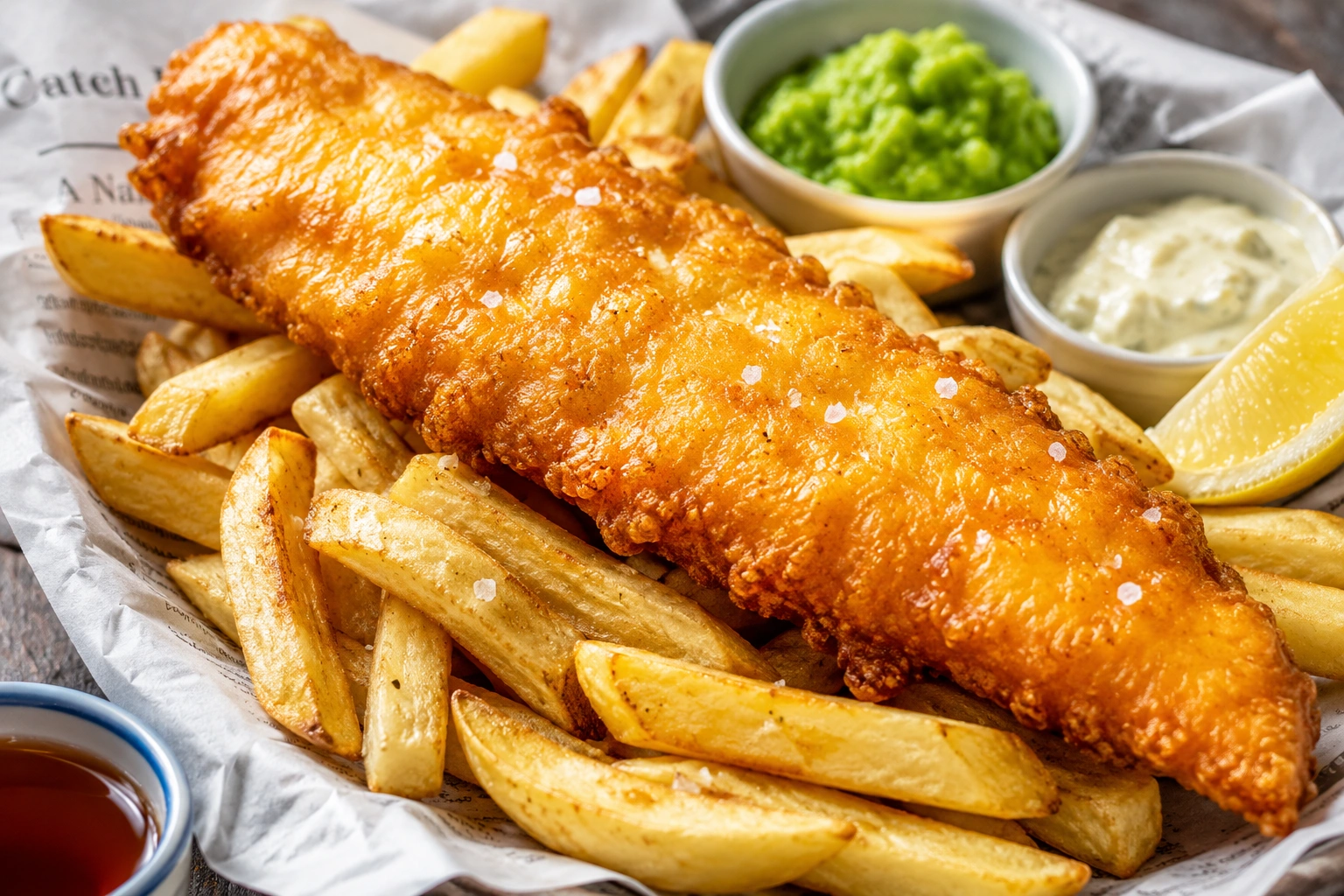
This British fish and chips recipe combines tender, flaky white fish with a light golden batter and thick-cut potatoes that are fried twice for a crisp exterior and fluffy center.
Cod and haddock are both excellent choices because their firm flesh holds together during frying. The batter is prepared with flour, rice flour, baking powder, and very cold beer or sparkling water. Keeping the batter cold and the oil hot helps create a crisp coating rather than a heavy or greasy one.
The chips require two cooking stages. The first gently cooks the potatoes through, while the second produces their golden, crisp surface. Serve everything immediately with malt vinegar, lemon wedges, tartar sauce, or mushy peas.
Why This Fish and Chips Recipe Works
The potatoes are soaked and dried before frying, which removes some surface starch and excess moisture.
A small amount of rice flour or cornstarch makes the batter lighter and crispier than one made entirely with all-purpose flour.
The batter is mixed immediately before frying and kept cold. This creates a useful temperature contrast when it meets the hot oil.
The chips are fried twice at two different temperatures. The first fry cooks the centers, while the hotter second fry crisps the exteriors.
The fish is lightly coated in flour before entering the batter. This dry layer helps the wet batter adhere more evenly.
Quick Recipe Overview
| Recipe detail | Information |
|---|---|
| Preparation time | 25 minutes |
| Potato soaking time | 30 minutes |
| Cooking time | 30 minutes |
| Total time | About 1 hour 25 minutes |
| Servings | 4 |
| Fish options | Cod, haddock or pollock |
| First chip fry | 325°F or 165°C |
| Fish frying temperature | 350°F or 175°C |
| Final chip fry | 375°F or 190°C |
| Safe fish temperature | 145°F or 63°C |
Fish should reach at least 145°F or approximately 63°C in its thickest part. The USDA recommends checking seafood with a food thermometer rather than judging safety by color alone.
Ingredients
For the Fish
- 4 skinless cod or haddock fillets, approximately 5–6 ounces or 140–170 g each
- ½ cup or 60 g all-purpose flour, for coating
- ½ teaspoon salt
- ¼ teaspoon freshly ground black pepper
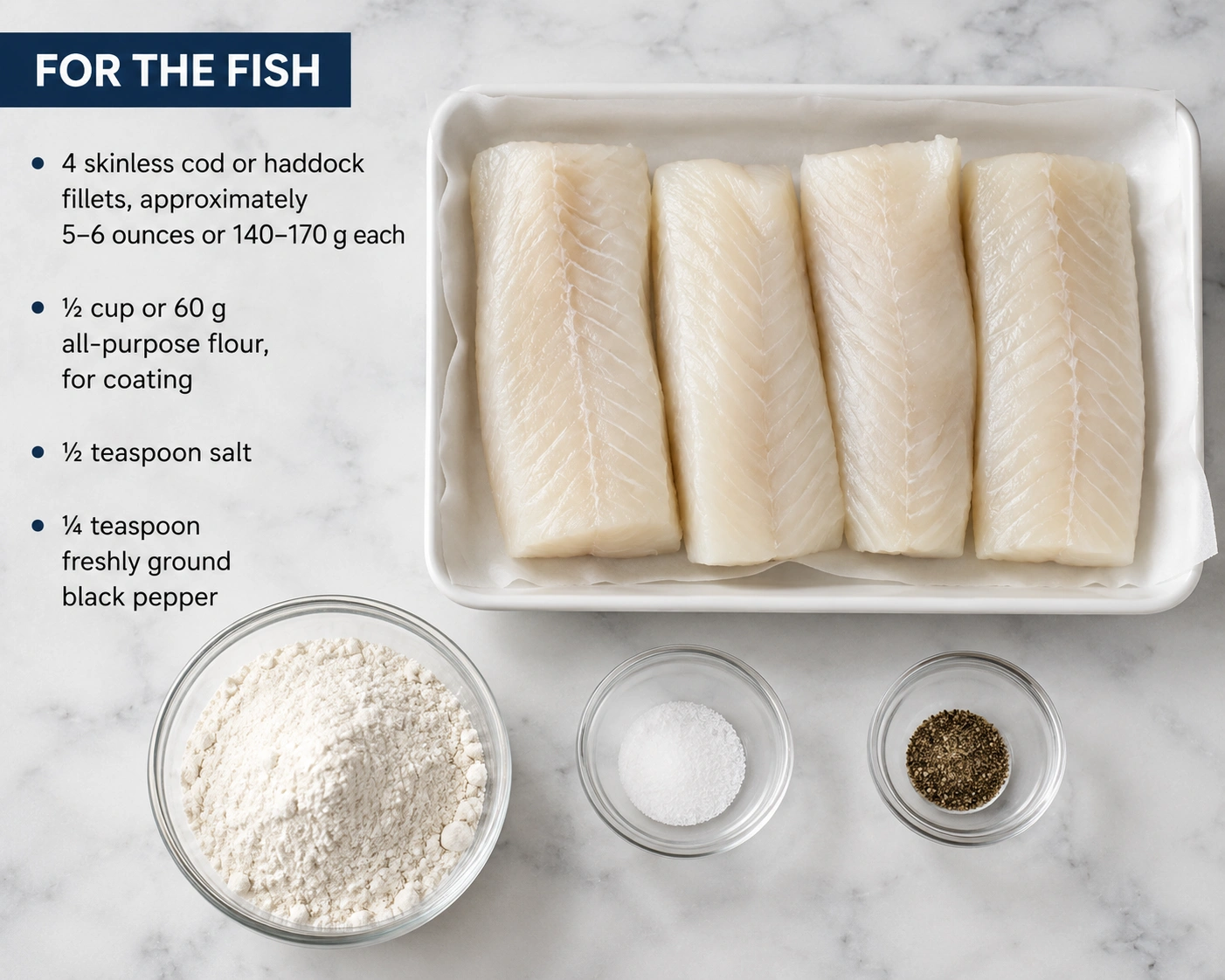
Choose fillets of similar thickness so that they cook at approximately the same rate.
Very thin tail pieces may finish before the thicker fillets. Fold a thin end slightly underneath itself when necessary to create a more even shape.
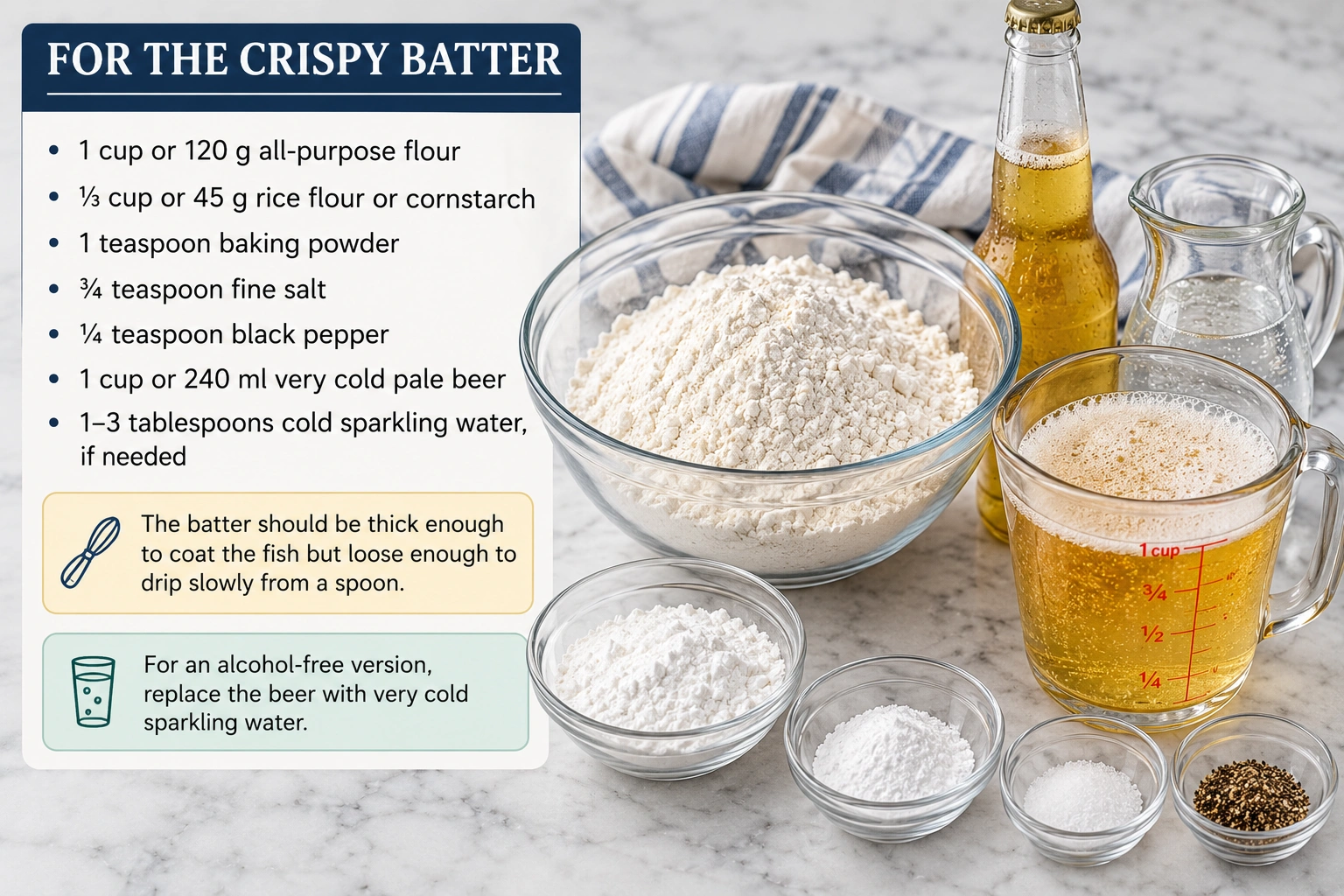
For the Crispy Batter
- 1 cup or 120 g all-purpose flour
- ⅓ cup or 45 g rice flour or cornstarch
- 1 teaspoon baking powder
- ¾ teaspoon fine salt
- ¼ teaspoon black pepper
- 1 cup or 240 ml very cold pale beer
- 1–3 tablespoons cold sparkling water, if needed
The batter should be thick enough to coat the fish but loose enough to drip slowly from a spoon.
For an alcohol-free version, replace the beer with very cold sparkling water.
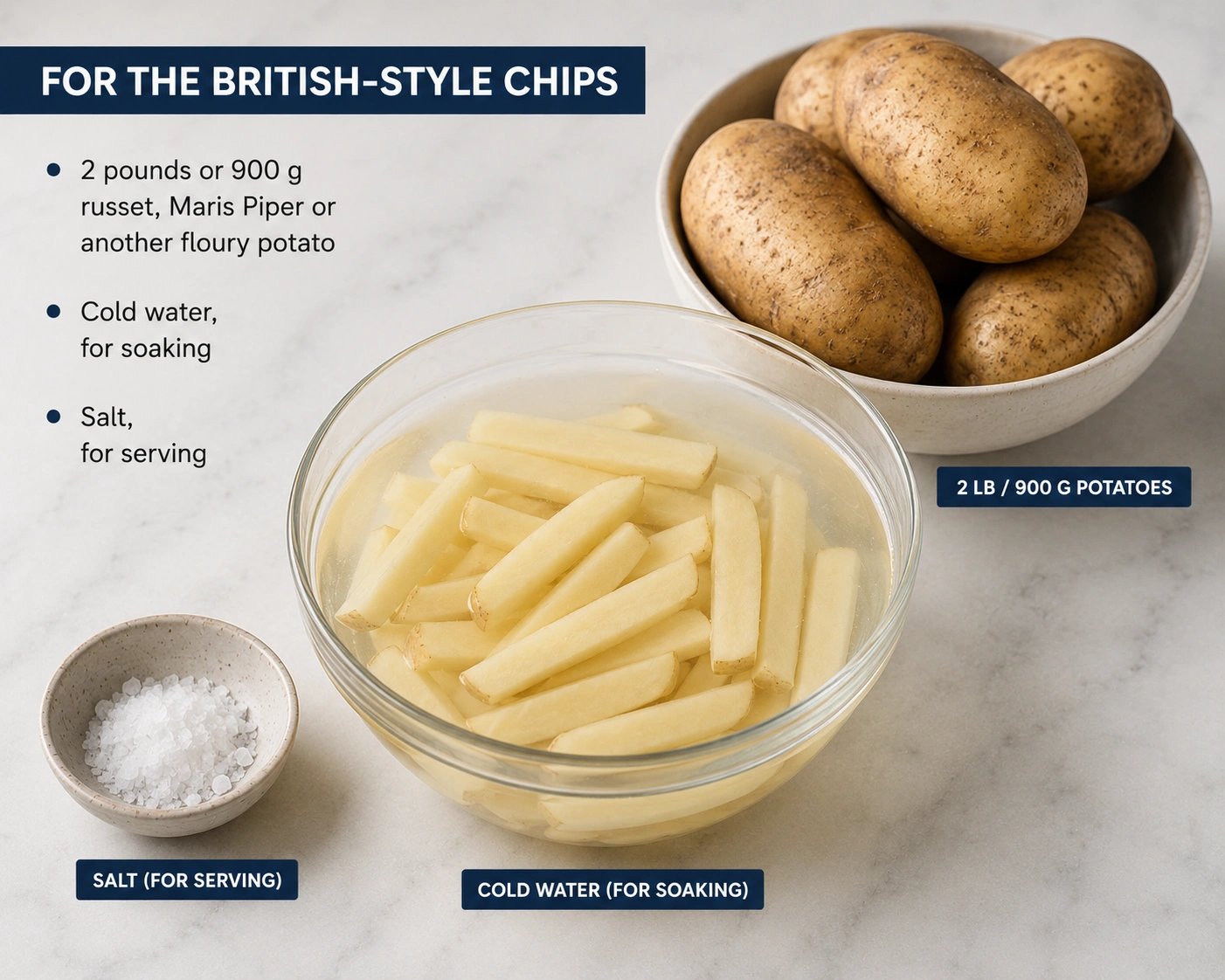
For the British-Style Chips
- 2 pounds or 900 g russet, Maris Piper or another floury potato
- Cold water, for soaking
- Salt, for serving
Russet potatoes are widely available in the United States and produce a fluffy center. Maris Piper potatoes are an excellent option where available.
For Frying
- Approximately 6–8 cups neutral frying oil
Suitable options include:
- Canola oil
- Vegetable oil
- Sunflower oil
- Peanut oil
Use enough oil to provide several inches of depth while leaving plenty of empty space at the top of the pot.
For Serving
- Lemon wedges
- Malt vinegar
- Tartar sauce
- Mushy peas
- Salt
- Pickled onions, optional
Equipment You’ll Need
- Heavy-bottomed Dutch oven or deep pot
- Deep-fry or instant-read thermometer
- Wire cooling rack
- Rimmed baking sheet
- Metal tongs or a spider strainer
- Paper towels
- Two mixing bowls
- Sharp knife
A thermometer is particularly important because adding cold potatoes or fish can lower the oil temperature quickly.
How to Make British Fish and Chips
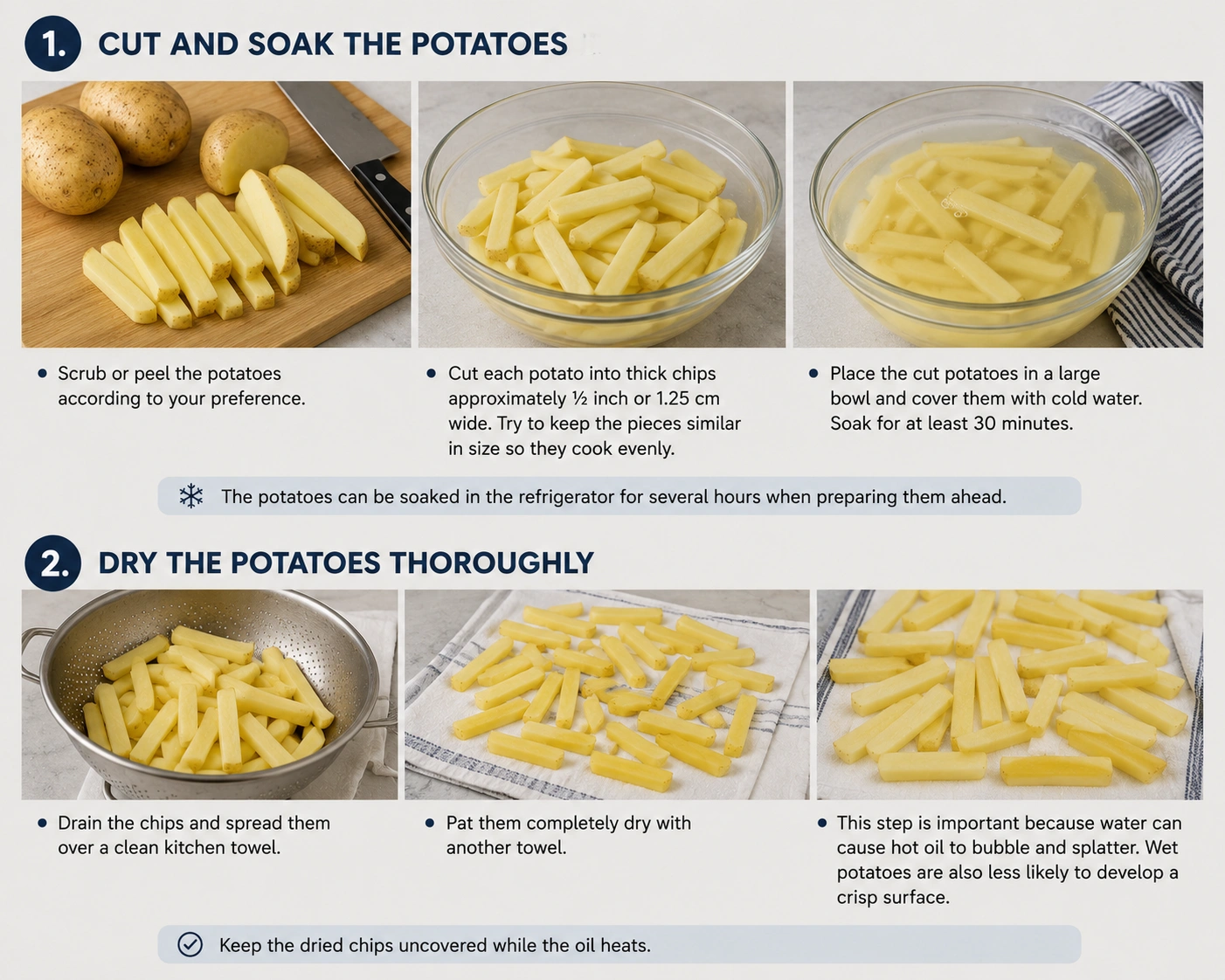
1. Cut and Soak the Potatoes
Scrub or peel the potatoes according to your preference.
Cut each potato into thick chips approximately ½ inch or 1.25 cm wide. Try to keep the pieces similar in size so they cook evenly.
Place the cut potatoes in a large bowl and cover them with cold water. Soak for at least 30 minutes.
The potatoes can be soaked in the refrigerator for several hours when preparing them ahead.
2. Dry the Potatoes Thoroughly
Drain the chips and spread them over a clean kitchen towel.
Pat them completely dry with another towel.
This step is important because water can cause hot oil to bubble and splatter. Wet potatoes are also less likely to develop a crisp surface.
Keep the dried chips uncovered while the oil heats.
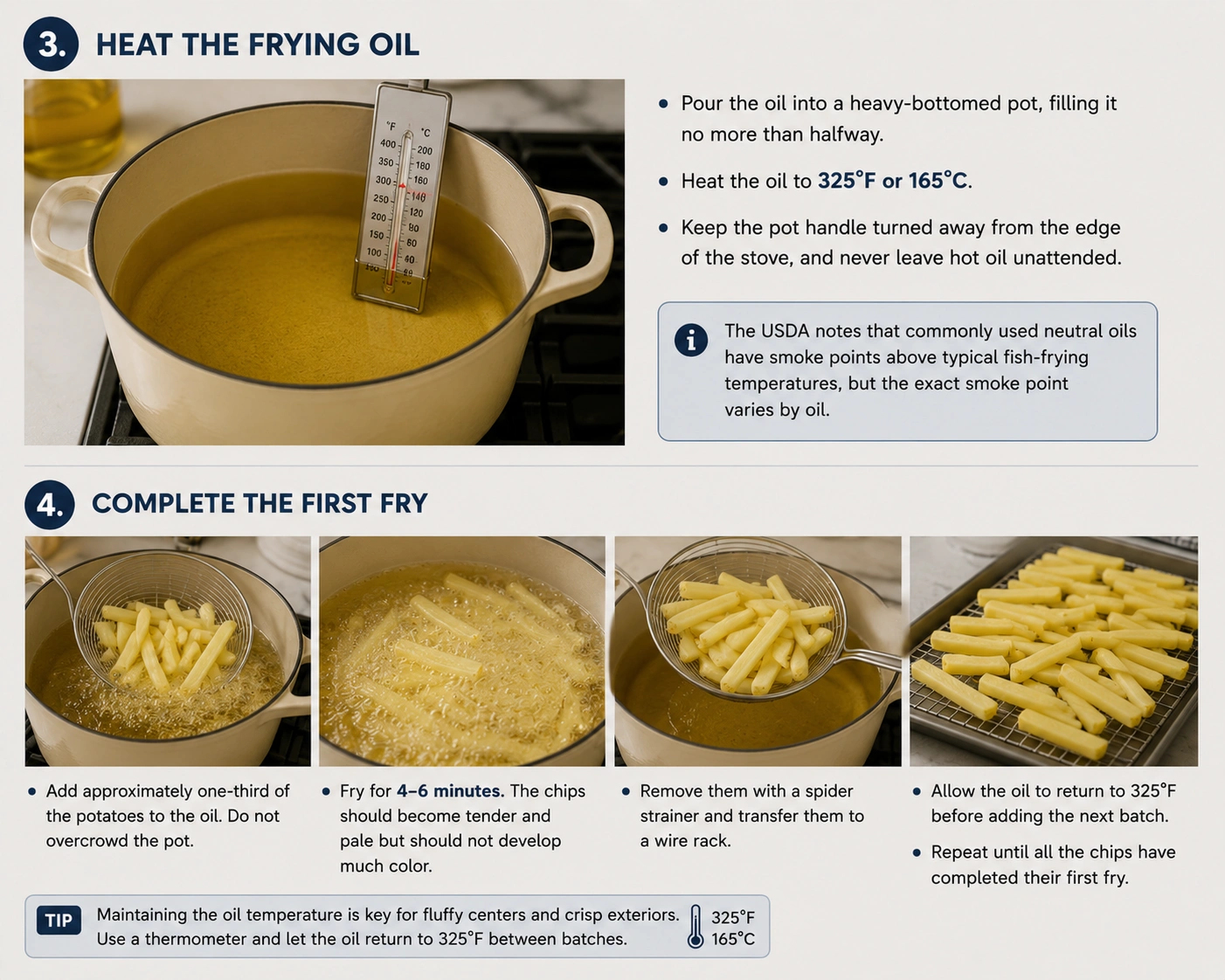
3. Heat the Frying Oil
Pour the oil into a heavy-bottomed pot, filling it no more than halfway.
Heat the oil to 325°F or 165°C.
Keep the pot handle turned away from the edge of the stove, and never leave hot oil unattended.
The USDA notes that commonly used neutral oils have smoke points above typical fish-frying temperatures, but the exact smoke point varies by oil.
4. Complete the First Fry
Add approximately one-third of the potatoes to the oil. Do not overcrowd the pot.
Fry for 4–6 minutes. The chips should become tender and pale but should not develop much color.
Remove them with a spider strainer and transfer them to a wire rack.
Allow the oil to return to 325°F before adding the next batch.
Repeat until all the chips have completed their first fry.
5. Prepare the Fish
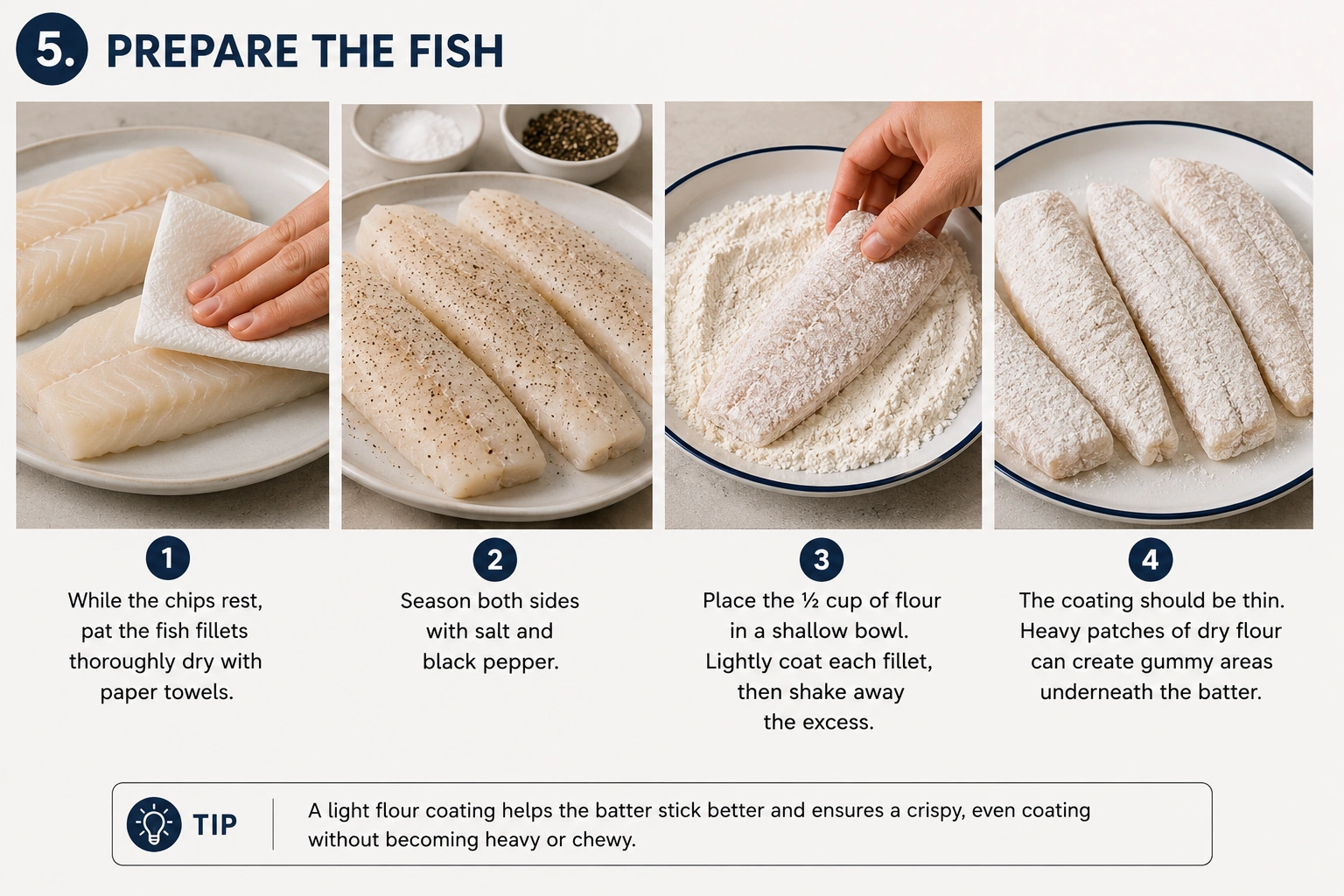
While the chips rest, pat the fish fillets thoroughly dry with paper towels.
Season both sides with salt and black pepper.
Place the ½ cup of flour in a shallow bowl. Lightly coat each fillet, then shake away the excess.
The coating should be thin. Heavy patches of dry flour can create gummy areas underneath the batter.
6. Make the Batter
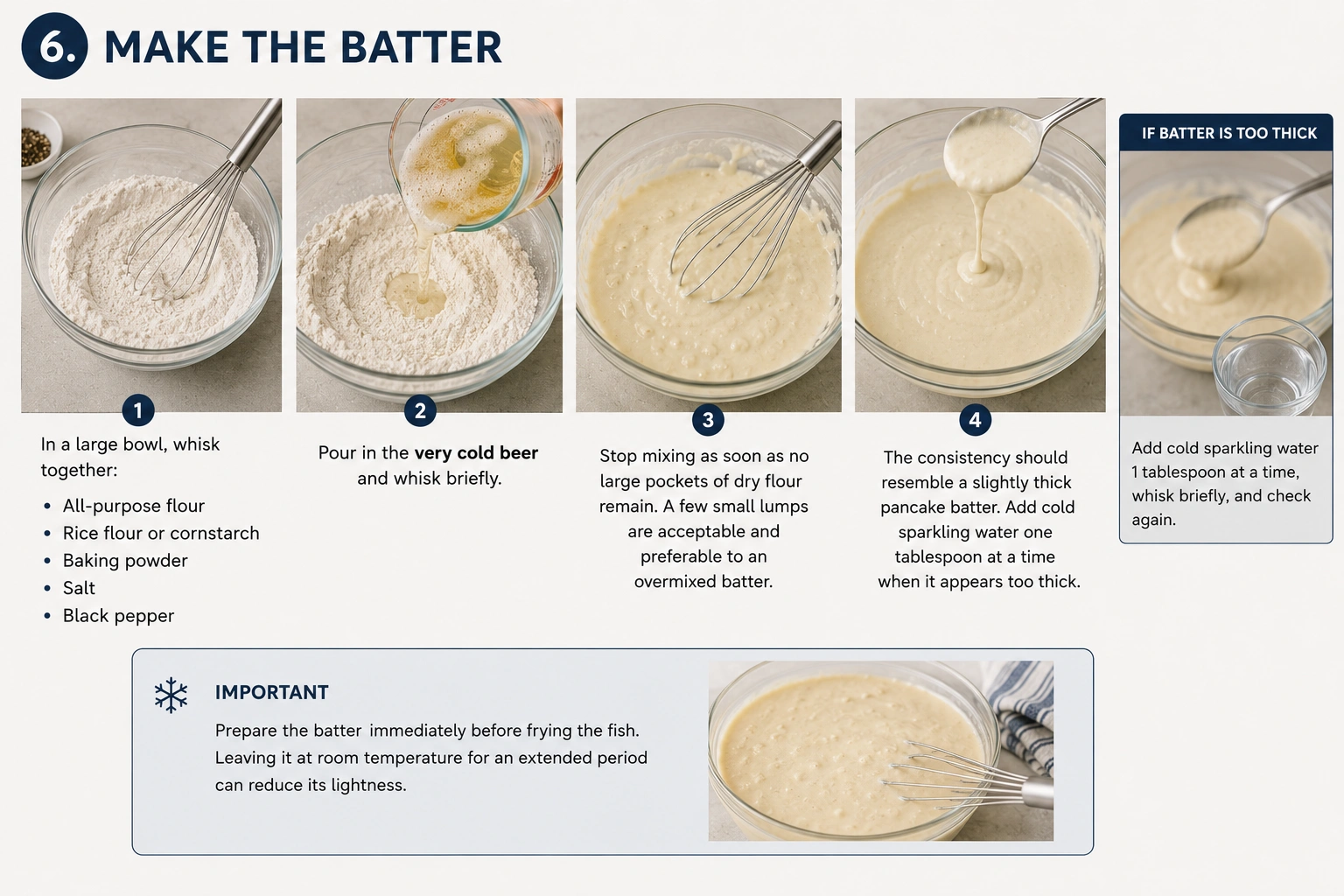
In a large bowl, whisk together:
- All-purpose flour
- Rice flour or cornstarch
- Baking powder
- Salt
- Black pepper
Pour in the very cold beer and whisk briefly.
Stop mixing as soon as no large pockets of dry flour remain. A few small lumps are acceptable and preferable to an overmixed batter.
The consistency should resemble a slightly thick pancake batter. Add cold sparkling water one tablespoon at a time when it appears too thick.
Prepare the batter immediately before frying the fish. Leaving it at room temperature for an extended period can reduce its lightness.
7. Fry the Fish
Adjust the oil temperature to 350°F or 175°C.
Hold one floured fillet by the narrow end and lower it into the batter. Turn it until completely coated, then allow the excess batter to drip back into the bowl.
Lower the fish carefully into the oil, moving it away from your body.
Fry only one or two pieces at a time, depending on the size of the pot.
Cook for approximately 4–6 minutes, turning once when needed, until the batter is crisp and deeply golden.
The exact cooking time depends on the thickness of the fish. Check the thickest portion with a thermometer; it should reach at least 145°F or 63°C.
8. Drain the Fish Properly
Transfer the fried fish to a wire rack placed over a baking sheet.
Avoid placing the fish directly onto a flat plate. Steam can collect underneath and soften the batter.
Season lightly with salt while the coating is still hot.
Keep the fish warm in a 200°F or 95°C oven while finishing the chips, but do not leave it there for long. Extended warming can dry the fish and soften the crust.
9. Complete the Second Chip Fry
Increase the oil temperature to 375°F or 190°C.
Return the partially cooked chips to the oil in small batches.
Fry for another 2–4 minutes, or until crisp and golden brown.
Transfer them to a wire rack or a paper-lined tray and season immediately with salt.
Allow the oil to return to temperature between batches.
10. Serve Immediately
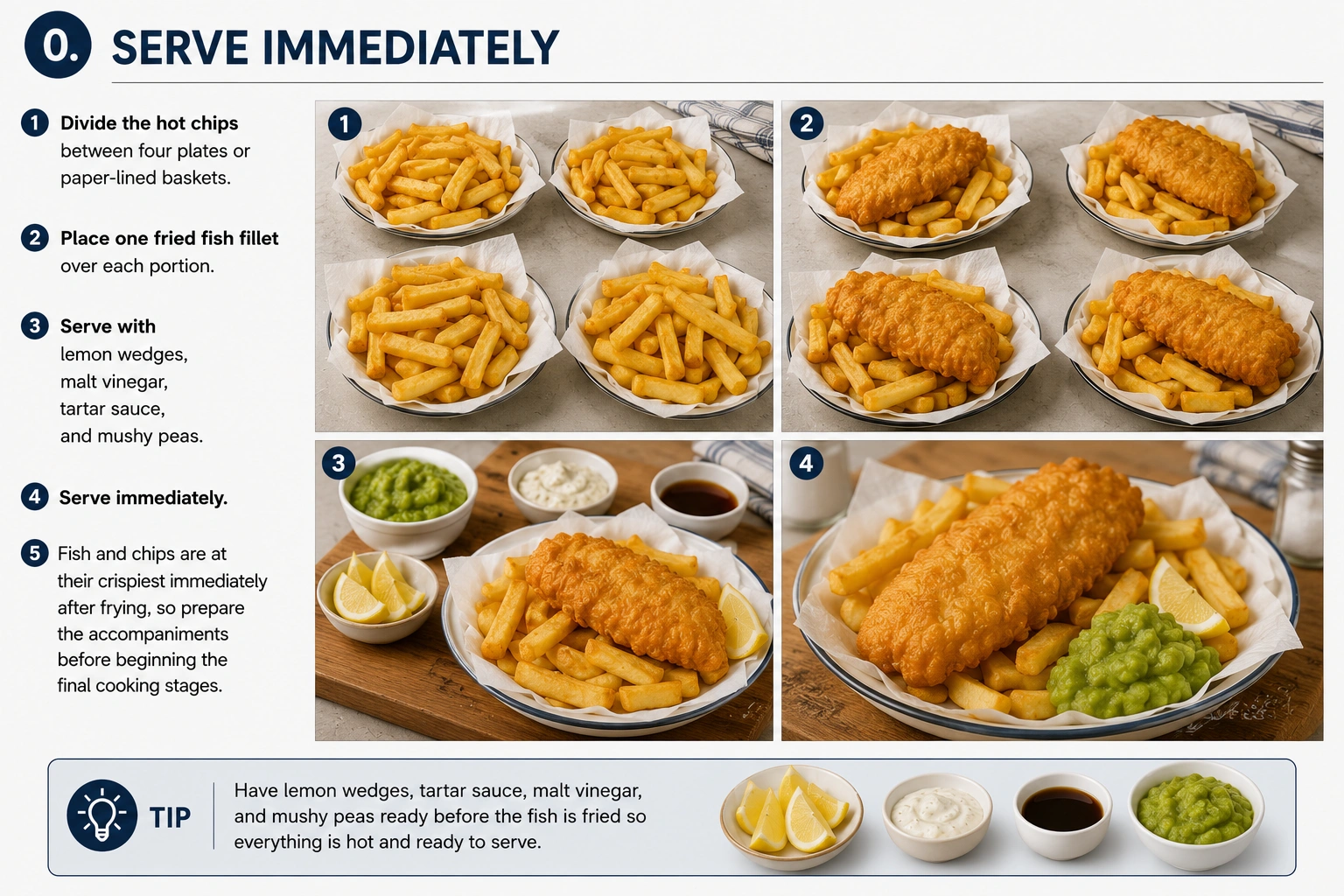
Divide the hot chips between four plates or paper-lined baskets.
Place one fried fish fillet over each portion.
Serve with lemon wedges, malt vinegar, tartar sauce, and mushy peas.
Fish and chips are at their crispiest immediately after frying, so prepare the accompaniments before beginning the final cooking stages.
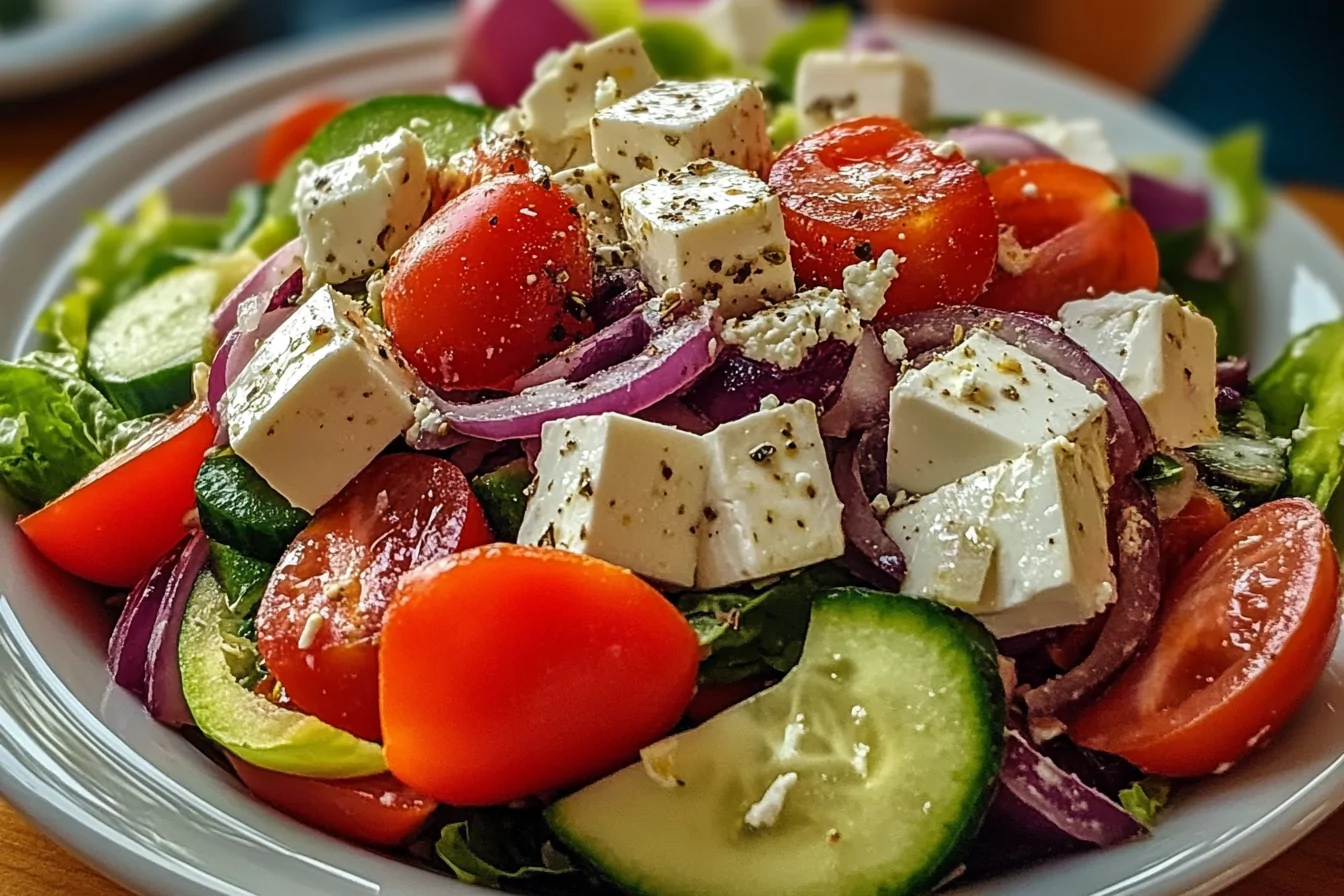
For a fresh side dish, try our Classic Greek Salad.
How to Keep Fish Batter Crispy
Keep Every Ingredient Cold
Cold beer, cold sparkling water, and chilled fish help slow gluten development and create a useful temperature contrast with the oil.
You can place the mixing bowl in the refrigerator before preparing the batter.
For safe frying and cooking guidance, see the USDA’s deep-fat frying and food safety guide. It recommends checking fish with a thermometer and cooking it to 145°F (63°C).
Do Not Overmix
Overmixing develops more gluten, which can make the coating heavy or chewy.
Whisk only until the dry ingredients are mostly incorporated.
Maintain the Oil Temperature
When the oil is too cool, the batter absorbs more oil before it sets.
When it is excessively hot, the outside may become dark before the fish is properly cooked.
Allow the oil to return to 350°F before starting each new batch.
Avoid Crowding the Pot
Adding too many fillets lowers the oil temperature and restricts circulation around the food.
Fry in small batches, even when it takes a little longer.
Drain on a Wire Rack
A rack allows hot air to circulate around the coating.
Paper towels can be placed underneath the rack to catch oil, but the fish itself should not sit directly on them for an extended period.
Troubleshooting British Fish and Chips
Why Is My Batter Greasy?
The oil was probably too cool, the pot was overcrowded, or the batter was too thick.
Check the temperature before every batch. Thin overly thick batter with a small amount of cold sparkling water.
Why Did the Batter Fall Off?
The fish may have been wet or insufficiently coated with flour.
Pat every fillet dry, add a thin dusting of flour, and shake away the excess before dipping it into the batter.
Lower the fish gently into the oil rather than dropping it.
Why Is My Batter Soft Instead of Crisp?
The fried fish may have been placed on a flat plate, covered tightly, or held for too long.
Drain it on a wire rack and serve it as soon as possible. Avoid covering it with foil because trapped steam softens the crust.
Why Are My Chips Brown but Hard Inside?
The chips may have skipped the lower-temperature first fry.
The first fry cooks the center gently. The second, hotter fry creates the crisp exterior.
Very thick chips may require an additional minute or two during the first stage.
Why Are My Chips Limp?
The potatoes may have contained excess water, the oil may have been too cool, or the second fry may have been too short.
Dry the potatoes thoroughly and wait until the oil reaches 375°F before completing the second fry.
Why Is the Fish Undercooked?
The fillets may have been unusually thick, or the oil may have been excessively hot.
Covering or color alone does not confirm that the fish is safe. Check the thickest part with a thermometer and continue frying until it reaches 145°F.
Recipe Variations
Beer-Free Fish and Chips
Replace the beer with an equal quantity of very cold sparkling water.
The flavor will be slightly milder, but the carbonation still helps produce a light coating.
Gluten-Free Fish and Chips
Use a gluten-free all-purpose flour blend for coating and batter.
Confirm that the baking powder, beer, and all packaged accompaniments are also labeled gluten-free.
Gluten-free beer or sparkling water can provide the liquid.
Air-Fryer Chips
Prepare the fish using the original frying method and cook the chips in an air fryer to reduce the amount of oil required.
Toss the cut potatoes with a small amount of oil and cook according to your air fryer’s instructions, turning them several times.
Oven-Baked Alternative
The same wet batter is not suitable for ordinary oven baking because it needs hot oil to set immediately.
For baked fish, use a coating made from flour, beaten egg, and breadcrumbs instead.
Different Fish Options
Cod and haddock are reliable choices, but pollock can provide a more affordable alternative.
Choose firm, skinless fillets and avoid pieces with very uneven thickness.
What to Serve With Fish and Chips
Traditional-style accompaniments include:
- Malt vinegar
- Tartar sauce
- Mushy peas
- Lemon wedges
- Pickled onions
For a fresher side, serve the fish with coleslaw, a cucumber salad, or a simple green salad.
Do not add vinegar until immediately before eating. Applying it too early will soften the batter and chips.
How to Store and Reheat Leftovers
Allow leftovers to cool briefly, then refrigerate them in shallow airtight containers within two hours of cooking.
Use refrigerated leftovers within three to four days. Reheat them to 165°F or 74°C before serving.
Store the fish and chips separately when possible.
An oven or air fryer produces a better reheated texture than a microwave:
- Preheat the oven to 375°F or 190°C.
- Place the fish and chips on a wire rack over a baking sheet.
- Heat for approximately 10–15 minutes.
- Turn the chips once.
- Check that the center is fully heated before serving.
Microwaving is faster but usually makes the batter and chips soft.
Can You Freeze Fish and Chips?
Cooked battered fish can be frozen, although its texture will not be quite as crisp after reheating.
Allow it to cool, wrap each fillet separately, and place it in a freezer-safe container.
Freeze for up to one month for the best quality.
Reheat from frozen in a hot oven or air fryer until crisp and thoroughly heated.
Frequently Asked Questions
What fish is best for British fish and chips?
Cod and haddock are both excellent options because their firm white flesh holds together well during frying. Pollock is a more economical alternative. Choose thick, skinless fillets of similar size so they cook evenly.
Can I make fish batter without beer?
Yes. Replace the beer with very cold sparkling water. The batter will have a milder flavor but can still become light and crisp. Avoid using warm or completely flat water.
Why do you fry chips twice?
The first fry cooks the potato centers gently without adding much color. The hotter second fry dries and crisps the surfaces. Using only one high-temperature fry may brown the outside before the center becomes fluffy.
Can I prepare the batter in advance?
It is better to mix the batter immediately before frying. As it sits, the liquid warms and the flour continues absorbing moisture, which can produce a heavier coating. The dry ingredients can be combined earlier.
Should fish batter contain an egg?
An egg is not required. This version uses cold beer, flour, rice flour, and baking powder for a lighter coating. Egg-based batters can be richer but may also become thicker.
How do I know when fried fish is cooked?
The batter should be golden and crisp, and the center of the fish should reach at least 145°F or 63°C. Insert a food thermometer into the thickest part of the fillet.
Can I reuse the frying oil?
Oil can sometimes be cooled, strained, and reused when it has not become excessively dark, foamy, or strongly flavored. Allow it to cool completely before handling. Never add water to hot oil.
Can I use frozen fish?
Yes, but thaw it completely in the refrigerator and pat it very dry before coating. Excess water can cause splattering and prevent the batter from adhering properly.
Final Thoughts
This British fish and chips recipe produces flaky white fish inside a crisp, golden batter, accompanied by thick chips with fluffy centers.
The most important steps are drying the fish and potatoes, keeping the batter cold, monitoring the oil temperature, frying in small batches, and serving everything immediately.
Add malt vinegar, lemon, tartar sauce, or mushy peas and enjoy a classic-style fish and chips dinner prepared in your own kitchen.