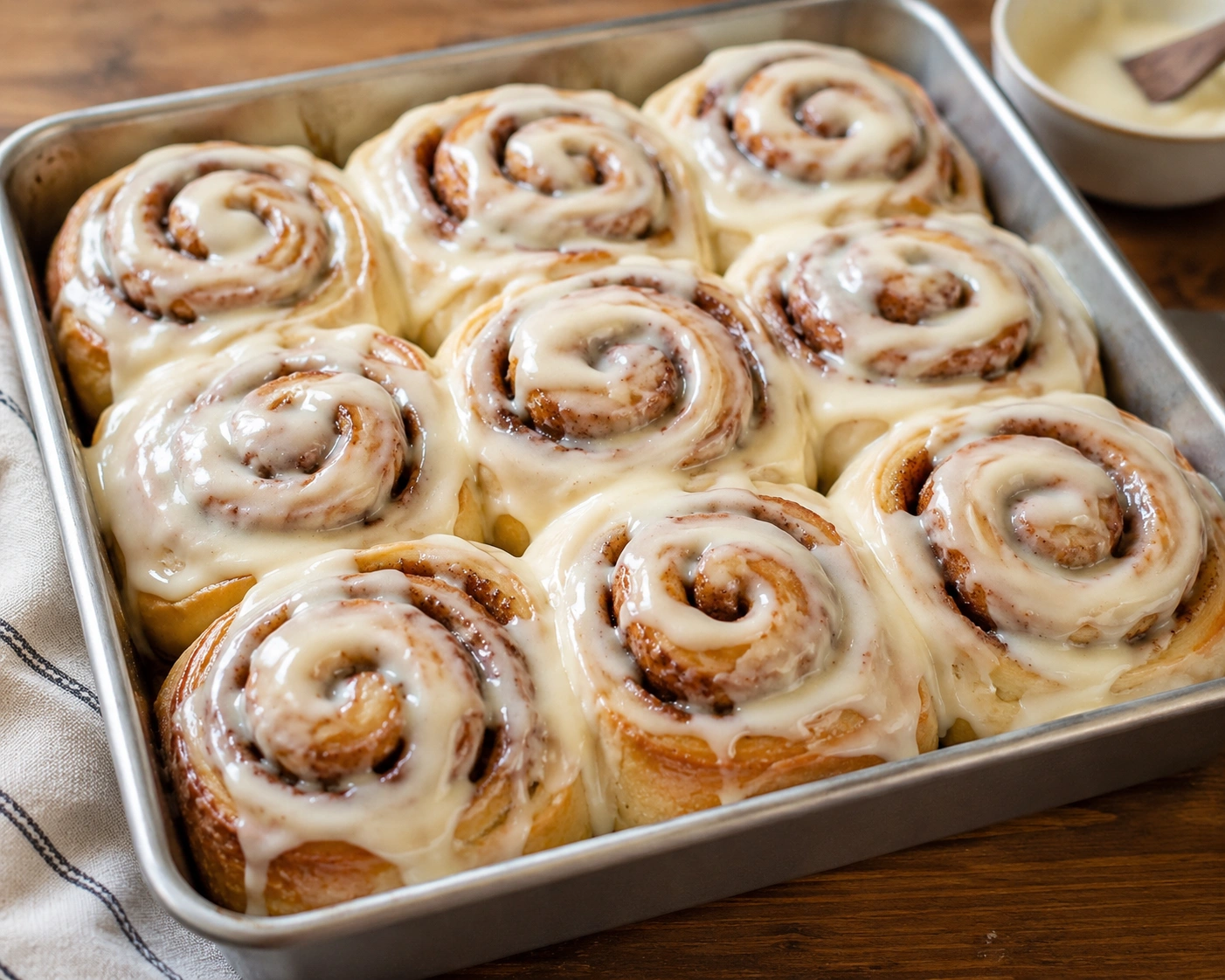

These cinnamon rolls with cream cheese frosting combine soft, buttery yeast dough with a rich brown sugar and cinnamon filling. After baking, the warm rolls are covered with smooth vanilla cream cheese frosting that melts gently into every spiral.
The recipe produces nine generously sized rolls using familiar baking ingredients. The dough can be mixed by hand or with a stand mixer, and the shaped rolls can be refrigerated overnight when you want to serve them freshly baked in the morning.
Careful flour measurement, sufficient rising time, and avoiding overbaking are the three most important steps. Follow the visual signs in the instructions rather than relying only on the clock, because room temperature and yeast activity can affect how quickly the dough rises.
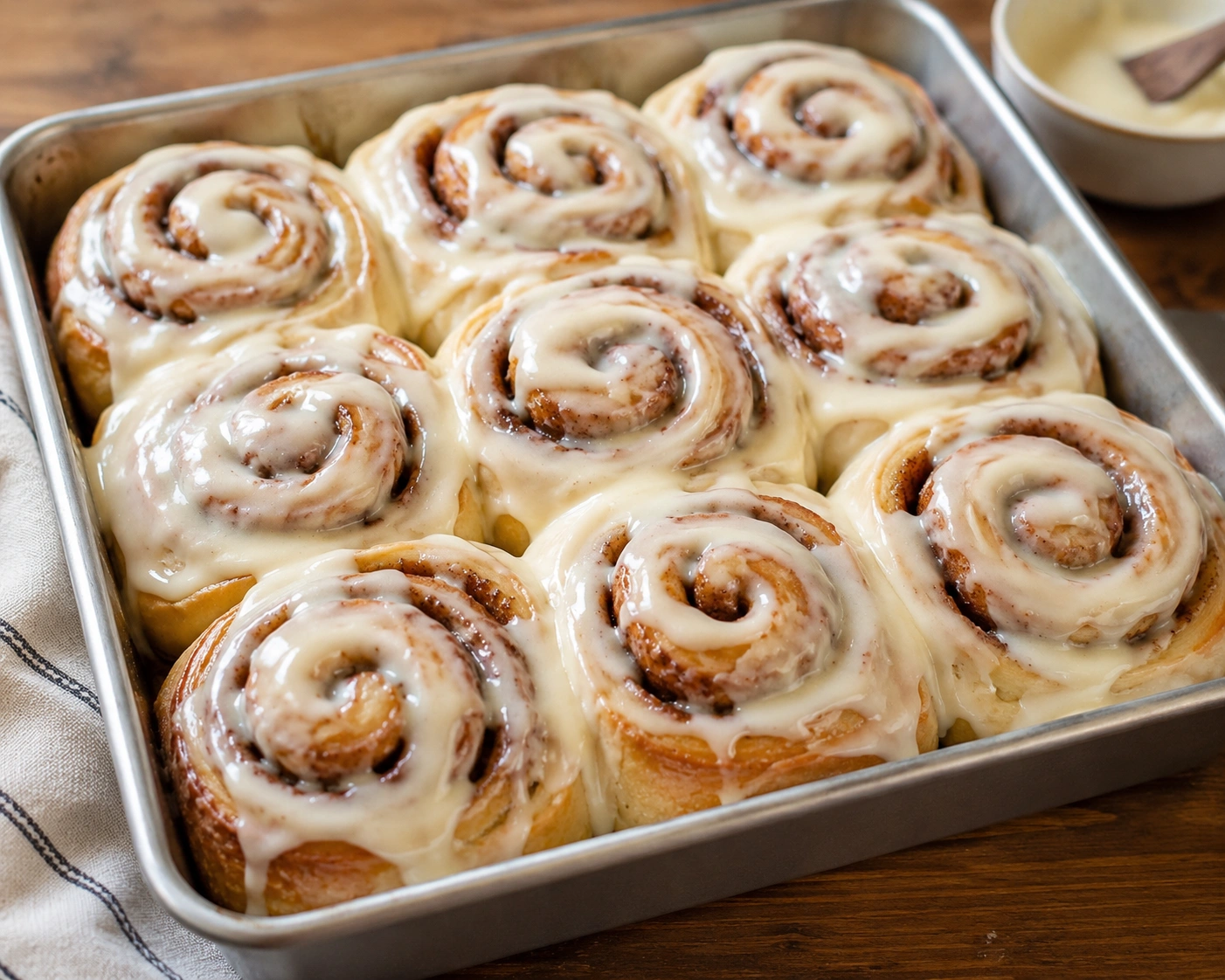
Why This Cinnamon Roll Recipe Works
The dough contains milk, egg, butter, and sugar, which create a softer and richer result than basic bread dough.
Brown sugar gives the filling a deep caramel flavor, while a small amount of flour helps bind the melted butter and reduces excessive filling leakage.
The rolls are baked close together so that their sides remain soft. They are then frosted while warm—but not immediately from the oven—allowing the frosting to soften without completely disappearing into the pan.
Quick Recipe Overview
| Recipe detail | Information |
|---|---|
| Preparation time | 30 minutes |
| First rise | 60–90 minutes |
| Second rise | 30–45 minutes |
| Baking time | 24–28 minutes |
| Total time | About 2 hours 40 minutes |
| Yield | 9 large cinnamon rolls |
| Oven temperature | 350°F or 175°C |
| Baking pan | 9-inch square pan |
| Difficulty | Moderate |
Ingredients
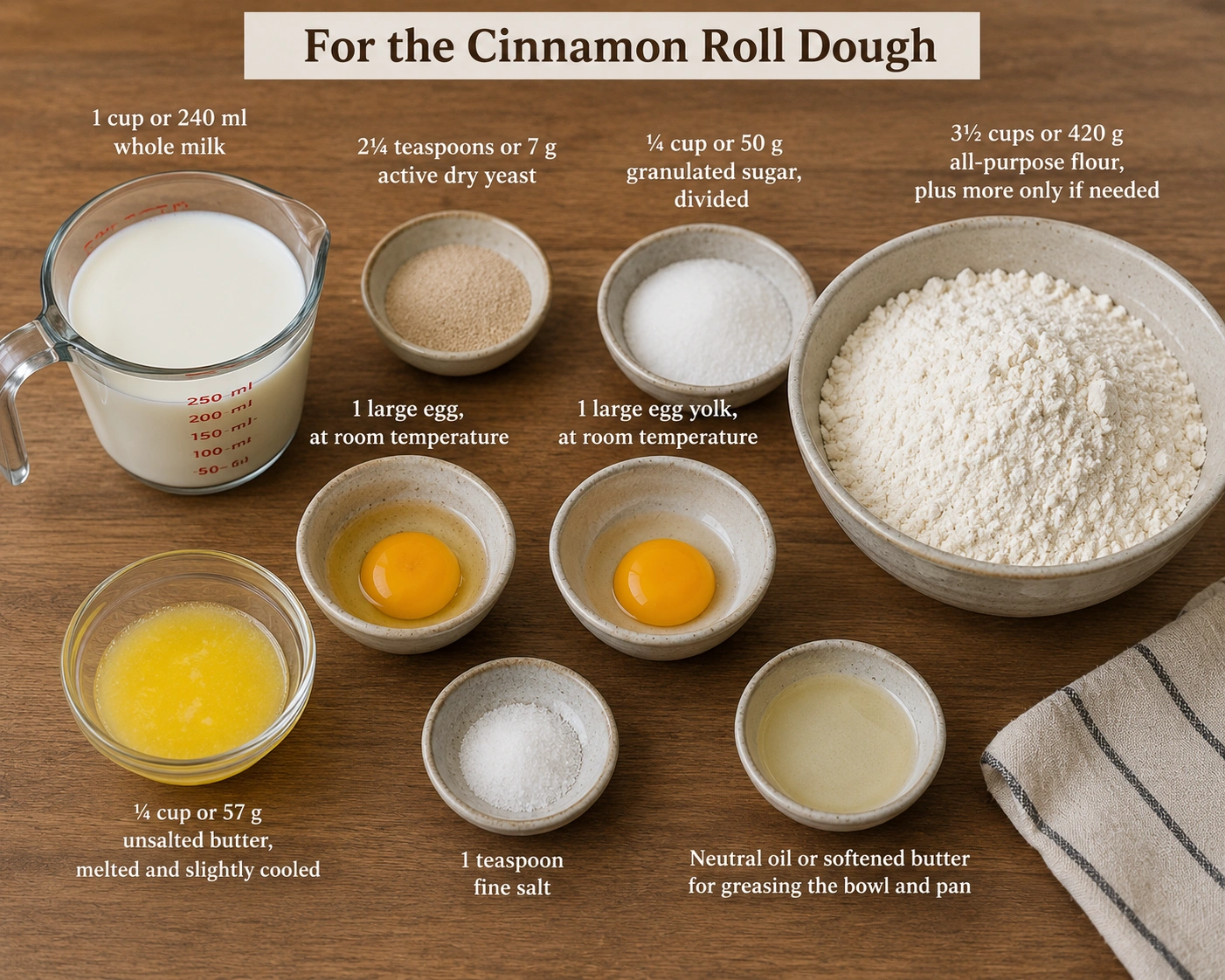
For the Cinnamon Roll Dough
- 1 cup or 240 ml whole milk
- 2¼ teaspoons or 7 g active dry yeast
- ¼ cup or 50 g granulated sugar, divided
- 1 large egg, at room temperature
- 1 large egg yolk, at room temperature
- ¼ cup or 57 g unsalted butter, melted and slightly cooled
- 1 teaspoon fine salt
- 3½ cups or 420 g all-purpose flour, plus more only if needed
- Neutral oil or softened butter for greasing the bowl and pan
Ingredient Notes
Whole milk gives the rolls a soft texture and fuller flavor. Reduced-fat milk can be used, but the dough may be slightly less rich.
The melted butter should be warm rather than hot. Very hot butter or milk can damage the yeast and may begin cooking the egg.
Active dry yeast should be dissolved in warm liquid before mixing. Red Star Yeast recommends liquid around 110–115°F when activating active dry yeast.
Instant yeast can also be used in the same quantity. It may be mixed directly with the flour instead of being activated separately.
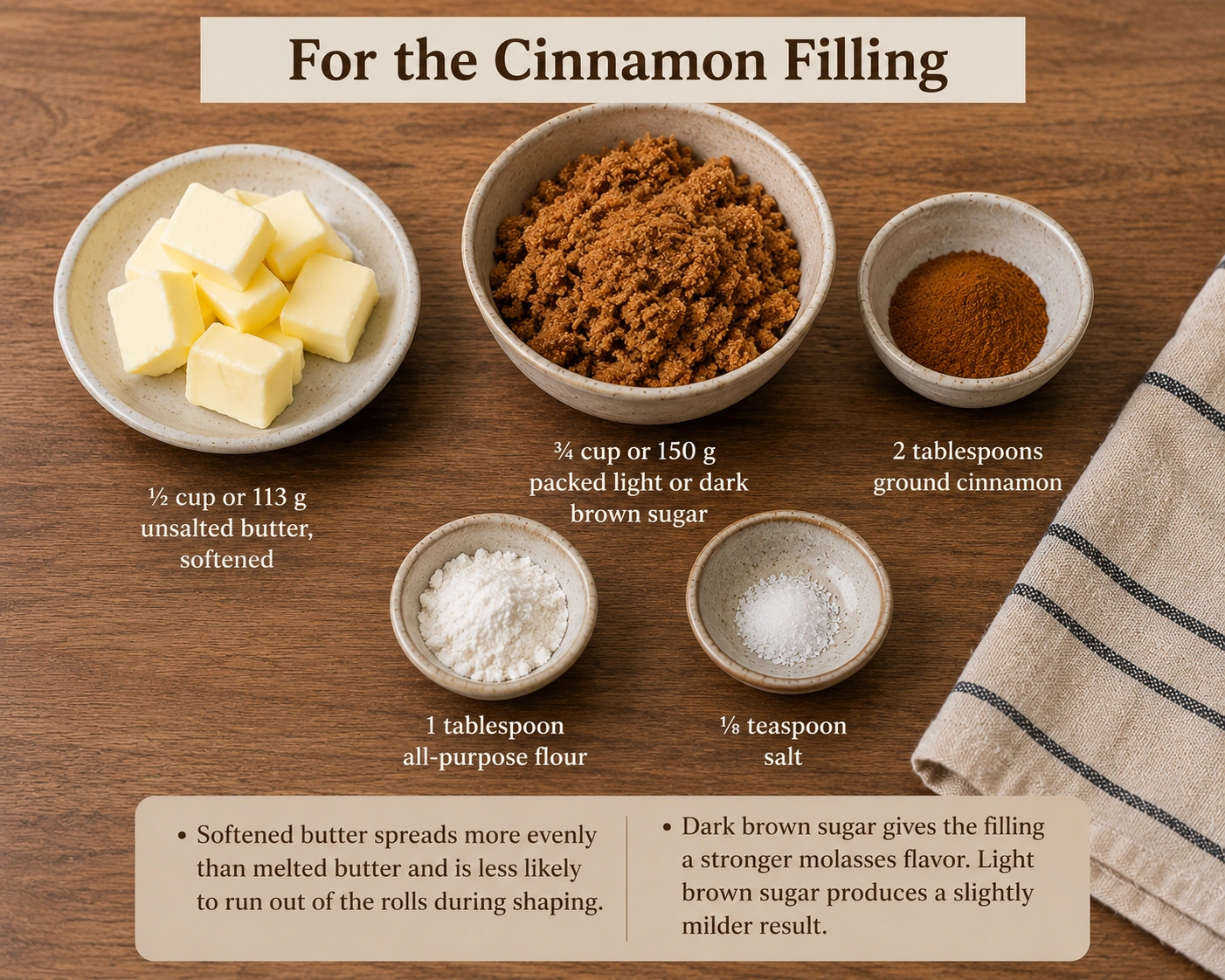
For the Cinnamon Filling
- ½ cup or 113 g unsalted butter, softened
- ¾ cup or 150 g packed light or dark brown sugar
- 2 tablespoons ground cinnamon
- 1 tablespoon all-purpose flour
- ⅛ teaspoon salt
Cinnamon Filling Ingredient Guide
Softened butter spreads more evenly than melted butter and is less likely to run out of the rolls during shaping.
Dark brown sugar gives the filling a stronger molasses flavor. Light brown sugar produces a slightly milder result.
For the Cream Cheese Frosting
- 4 ounces or 113 g full-fat cream cheese, softened
- 3 tablespoons or 42 g unsalted butter, softened
- 1 cup or 120 g powdered sugar
- 1 teaspoon vanilla extract
- Small pinch of salt
- 1–2 tablespoons milk or heavy cream, as needed
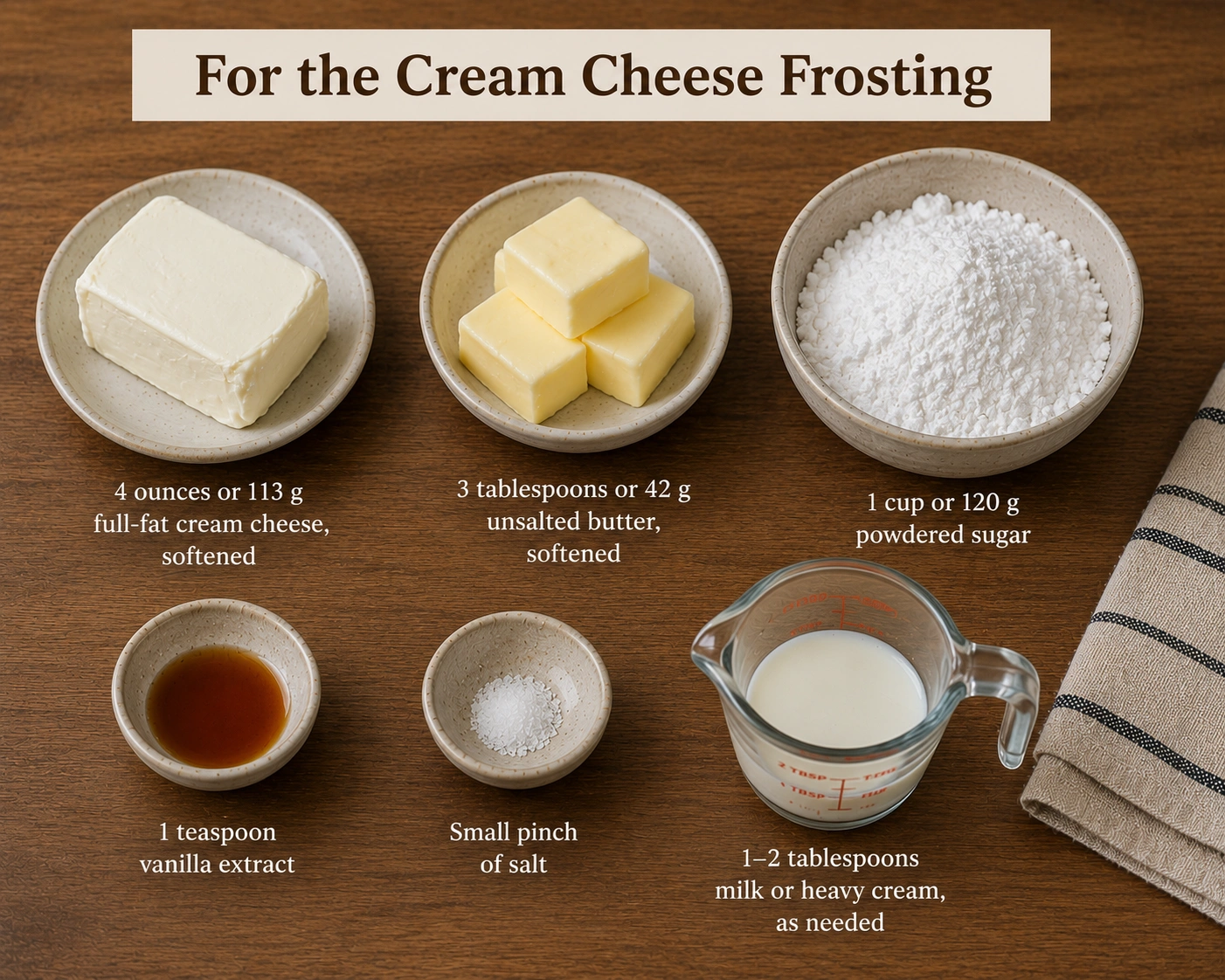
Use block-style cream cheese rather than whipped cream cheese from a tub. Tub-style cream cheese contains more moisture and may create a thin frosting.
How to Make Cinnamon Rolls with Cream Cheese Frosting
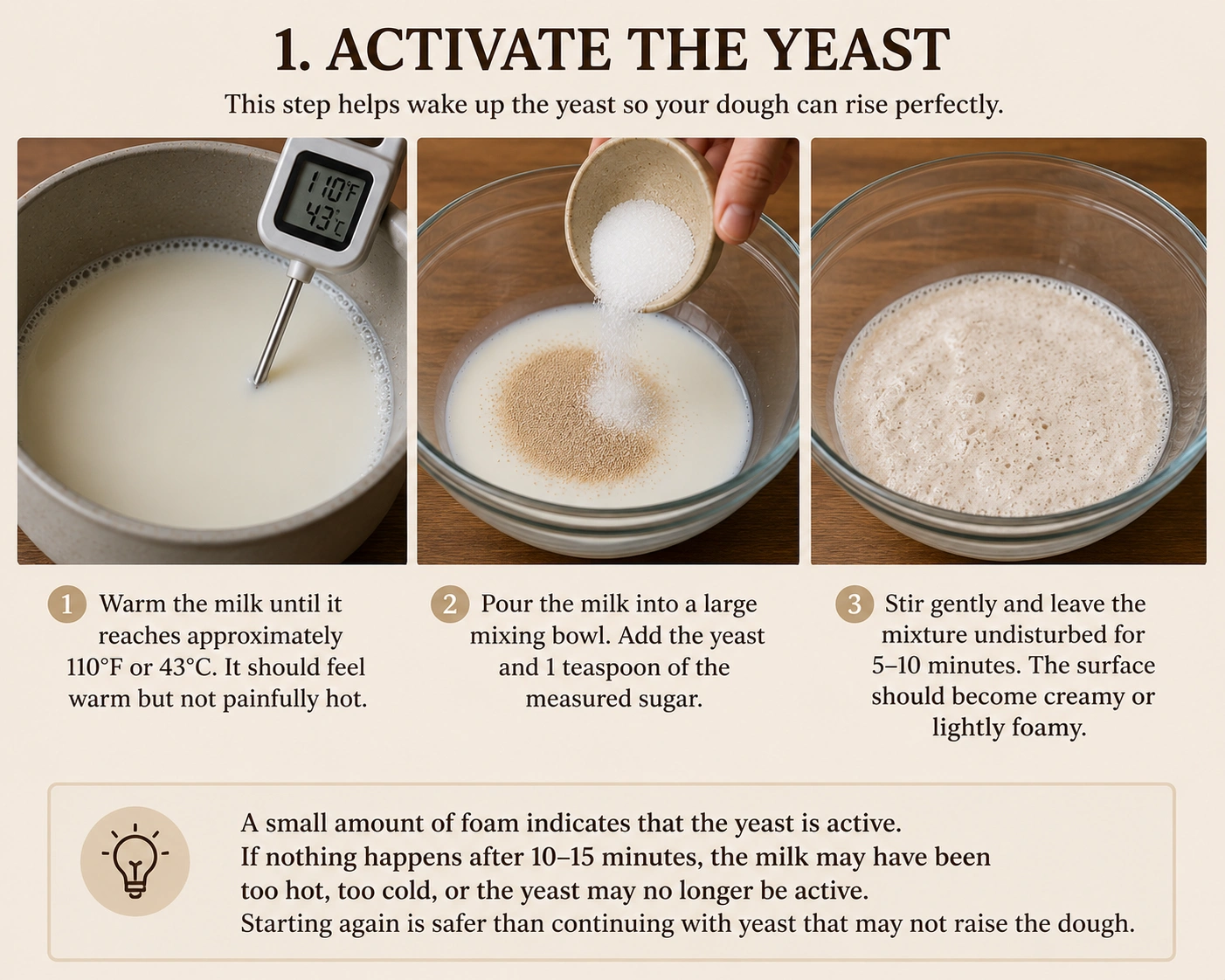
1. Activate the Yeast
Warm the milk until it reaches approximately 110°F or 43°C. It should feel warm but not painfully hot.
Pour the milk into a large mixing bowl. Add the yeast and 1 teaspoon of the measured sugar.
Stir gently and leave the mixture undisturbed for 5–10 minutes. The surface should become creamy or lightly foamy.
A small amount of foam indicates that the yeast is active. If nothing happens after 10–15 minutes, the milk may have been too hot, too cold, or the yeast may no longer be active. Starting again is safer than continuing with yeast that may not raise the dough.
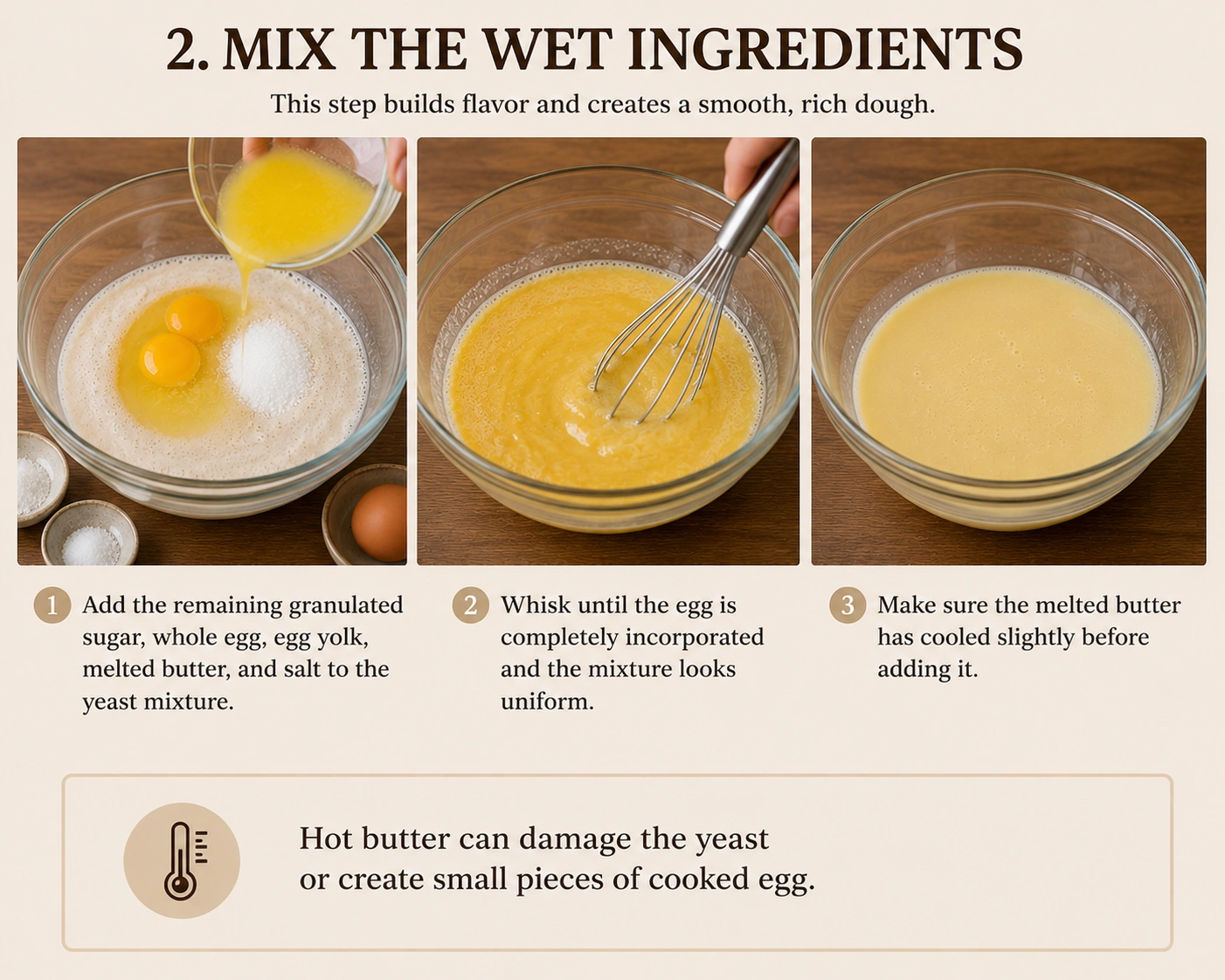
2. Mix the Wet Ingredients
Add the remaining granulated sugar, whole egg, egg yolk, melted butter, and salt to the yeast mixture.
Whisk until the egg is completely incorporated and the mixture looks uniform.
Make sure the melted butter has cooled slightly before adding it. Hot butter can damage the yeast or create small pieces of cooked egg.
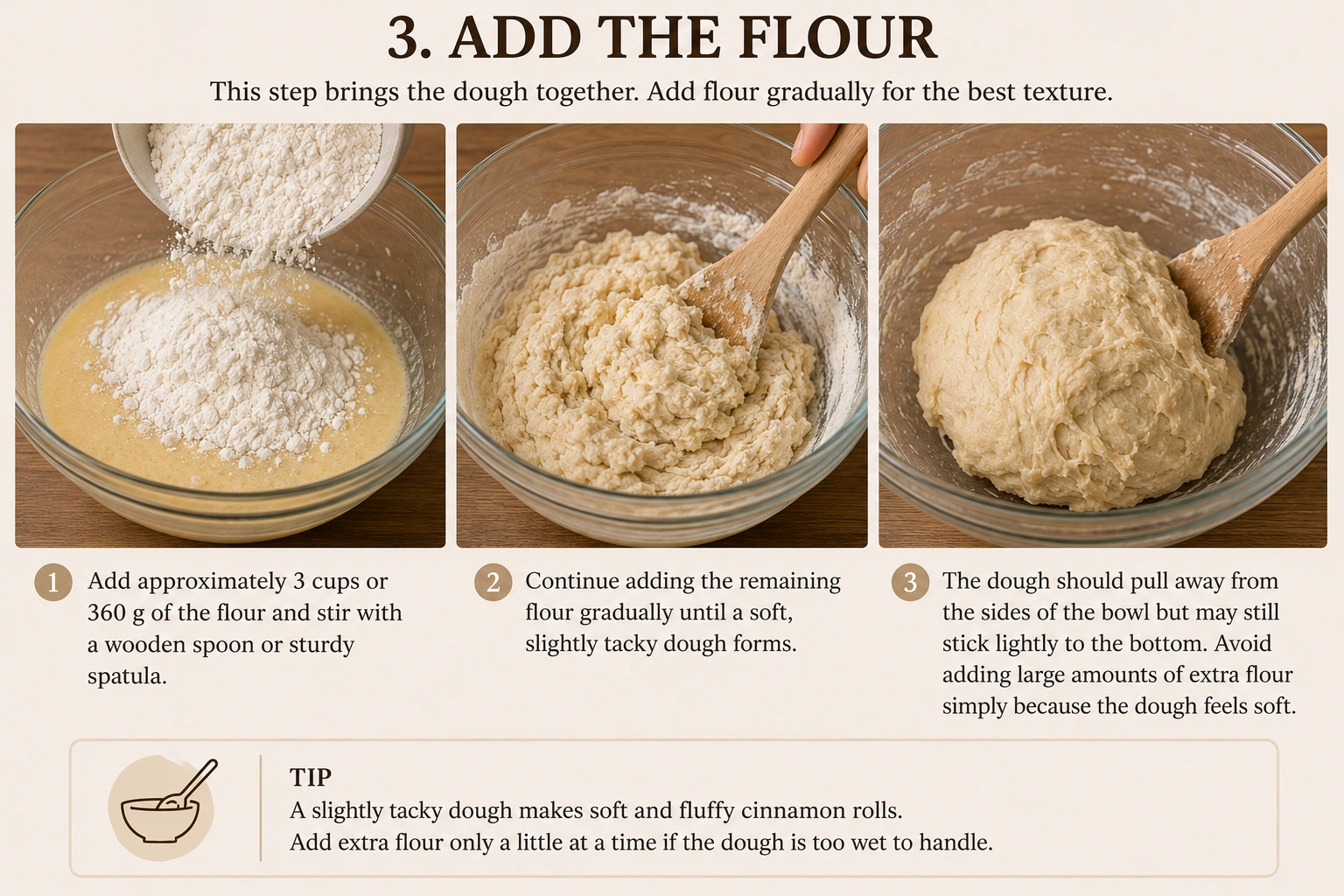
3. Add the Flour
Add approximately 3 cups or 360 g of the flour and stir with a wooden spoon or sturdy spatula.
Continue adding the remaining flour gradually until a soft, slightly tacky dough forms.
The dough should pull away from the sides of the bowl but may still stick lightly to the bottom. Avoid adding large amounts of extra flour simply because the dough feels soft.
Too much flour is one of the most common causes of dry, heavy cinnamon rolls.
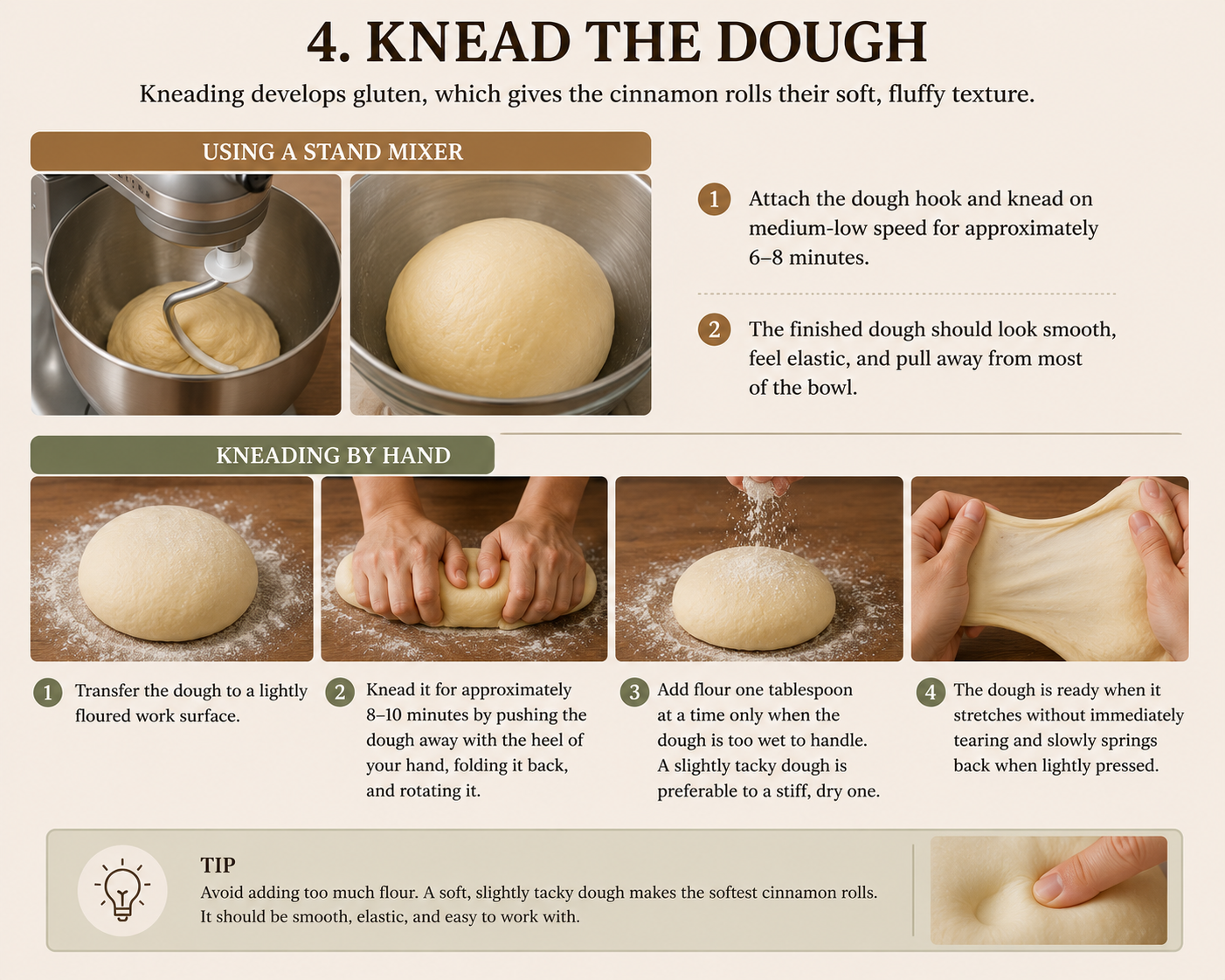
4. Knead the Dough
Using a Stand Mixer
Attach the dough hook and knead on medium-low speed for approximately 6–8 minutes.
The finished dough should look smooth, feel elastic, and pull away from most of the bowl.
Kneading by Hand
Transfer the dough to a lightly floured work surface.
Knead it for approximately 8–10 minutes by pushing the dough away with the heel of your hand, folding it back, and rotating it.
Add flour one tablespoon at a time only when the dough is too wet to handle. A slightly tacky dough is preferable to a stiff, dry one.
The dough is ready when it stretches without immediately tearing and slowly springs back when lightly pressed.
5. Let the Dough Rise
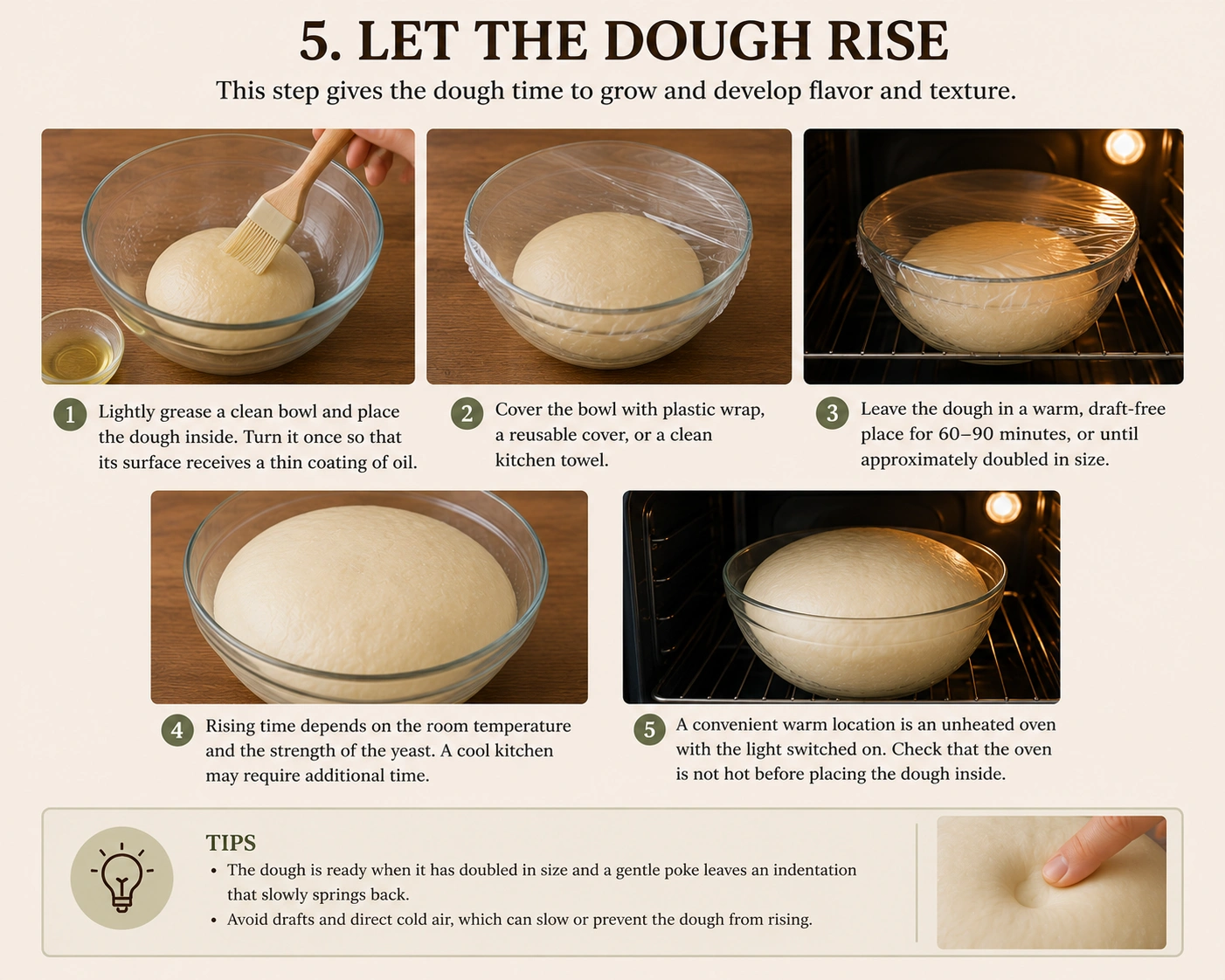
Lightly grease a clean bowl and place the dough inside. Turn it once so that its surface receives a thin coating of oil.
Cover the bowl with plastic wrap, a reusable cover, or a clean kitchen towel.
Leave the dough in a warm, draft-free place for 60–90 minutes, or until approximately doubled in size.
Rising time depends on the room temperature and the strength of the yeast. A cool kitchen may require additional time.
A convenient warm location is an unheated oven with the light switched on. Check that the oven is not hot before placing the dough inside.
6. Prepare the Cinnamon Filling
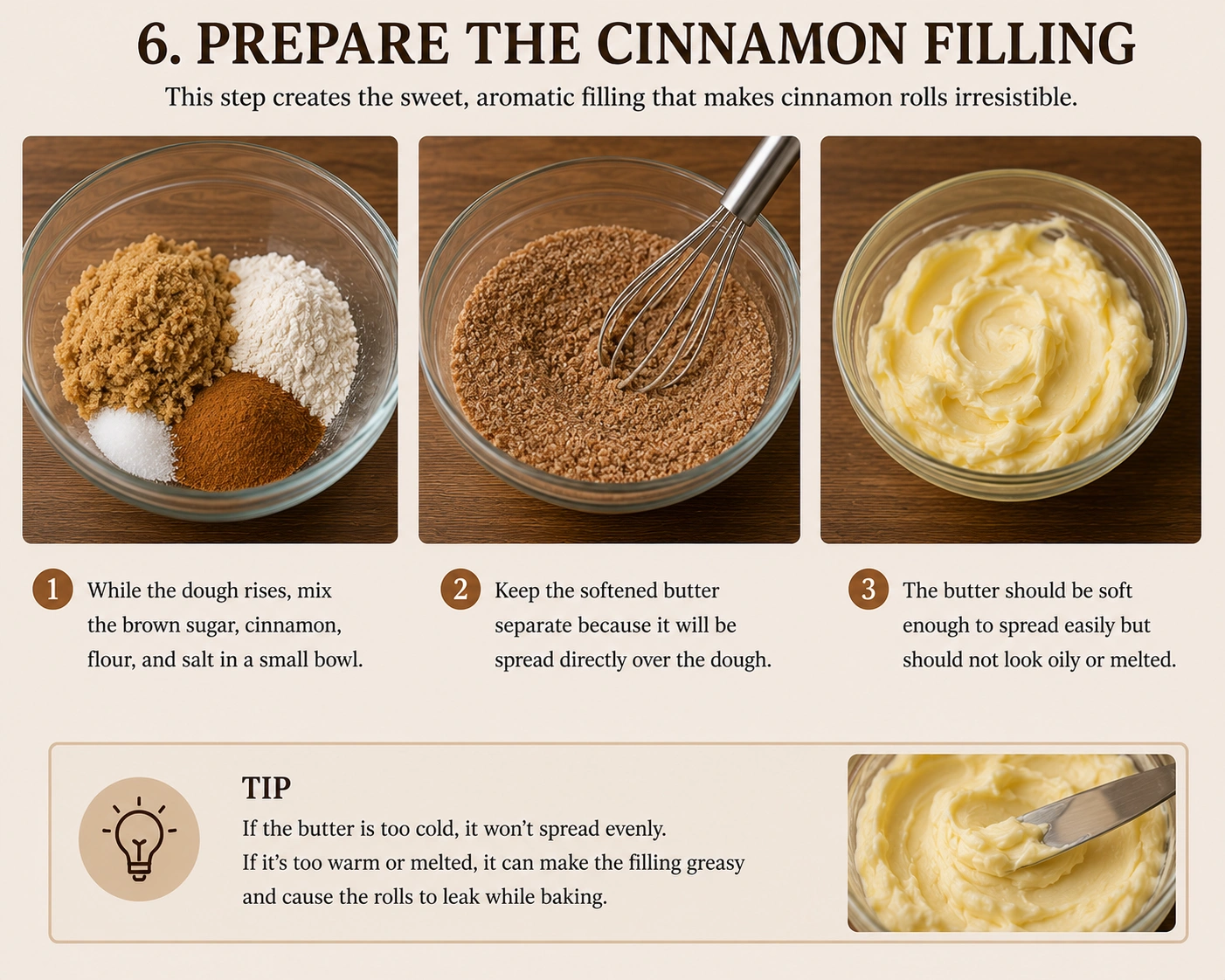
While the dough rises, mix the brown sugar, cinnamon, flour, and salt in a small bowl.
Keep the softened butter separate because it will be spread directly over the dough.
The butter should be soft enough to spread easily but should not look oily or melted.
7. Roll Out the Dough
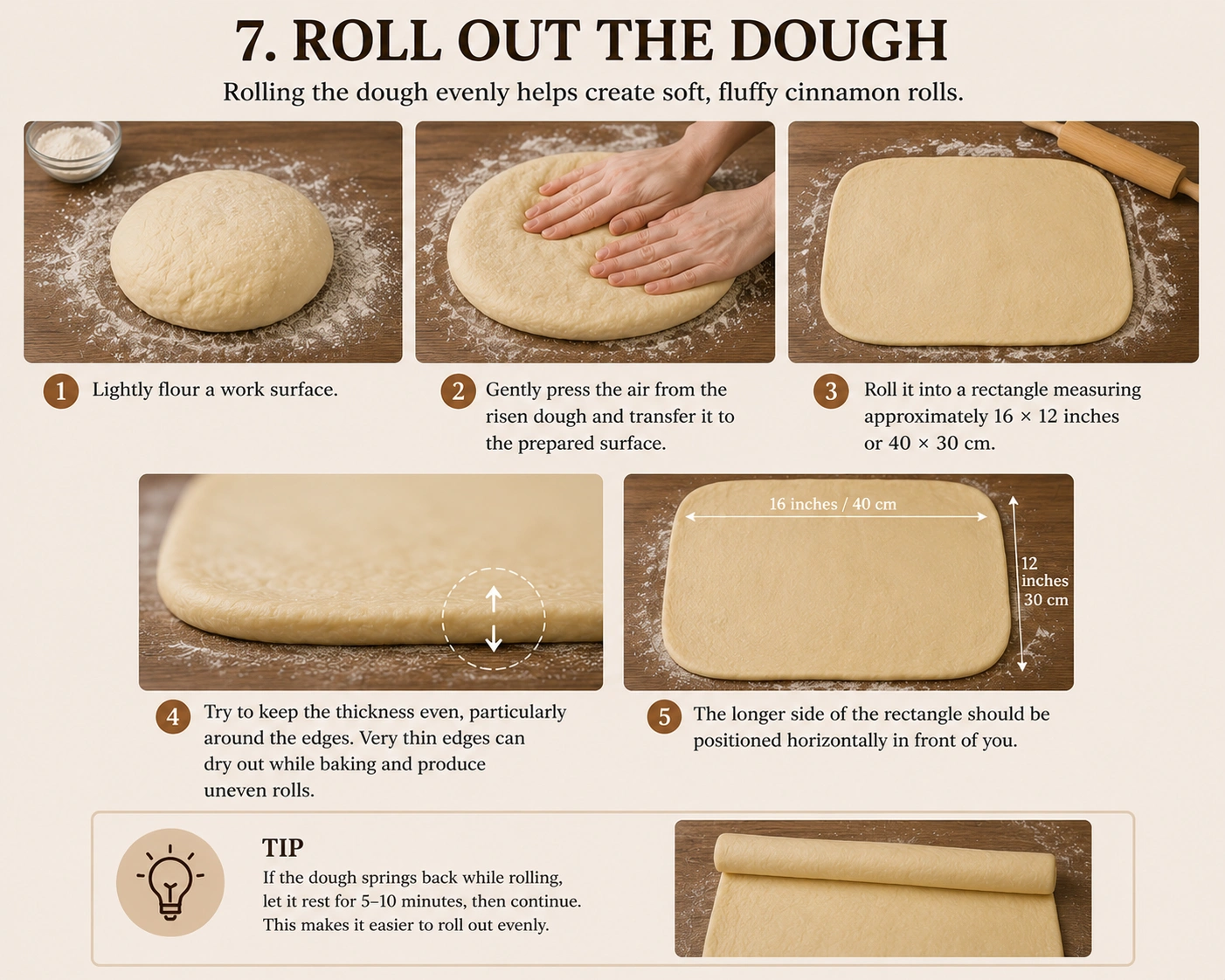
Lightly flour a work surface.
Gently press the air from the risen dough and transfer it to the prepared surface.
Roll it into a rectangle measuring approximately 16 × 12 inches or 40 × 30 cm.
Try to keep the thickness even, particularly around the edges. Very thin edges can dry out while baking and produce uneven rolls.
The longer side of the rectangle should be positioned horizontally in front of you.
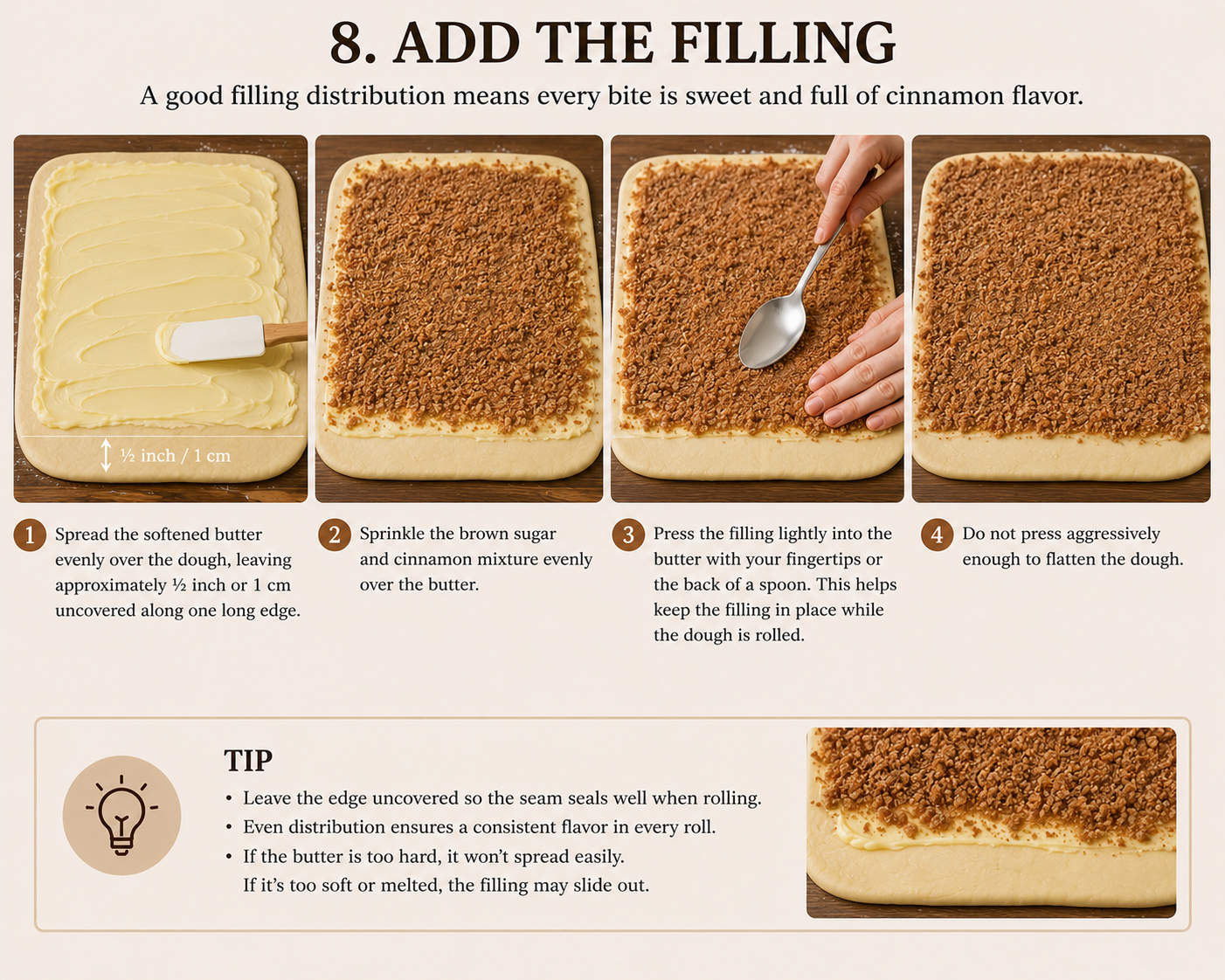
8. Add the Filling
Spread the softened butter evenly over the dough, leaving approximately ½ inch or 1 cm uncovered along one long edge.
Sprinkle the brown sugar and cinnamon mixture evenly over the butter.
Press the filling lightly into the butter with your fingertips or the back of a spoon. This helps keep the filling in place while the dough is rolled.
Do not press aggressively enough to flatten the dough.
9. Roll and Cut the Dough
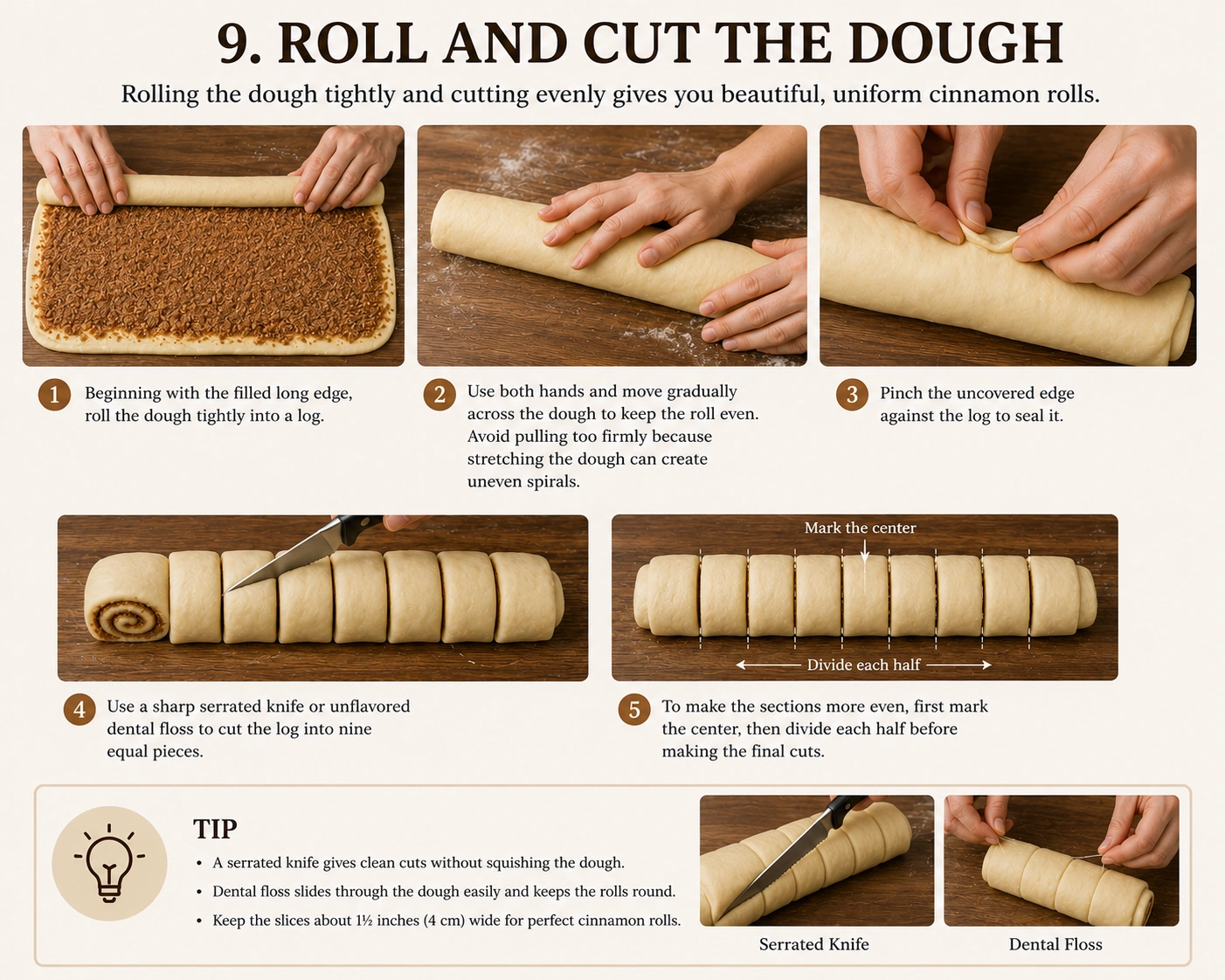
Beginning with the filled long edge, roll the dough tightly into a log.
Use both hands and move gradually across the dough to keep the roll even. Avoid pulling too firmly because stretching the dough can create uneven spirals.
Pinch the uncovered edge against the log to seal it.
Use a sharp serrated knife or unflavored dental floss to cut the log into nine equal pieces.
To make the sections more even, first mark the center, then divide each half before making the final cuts.
10. Arrange the Rolls
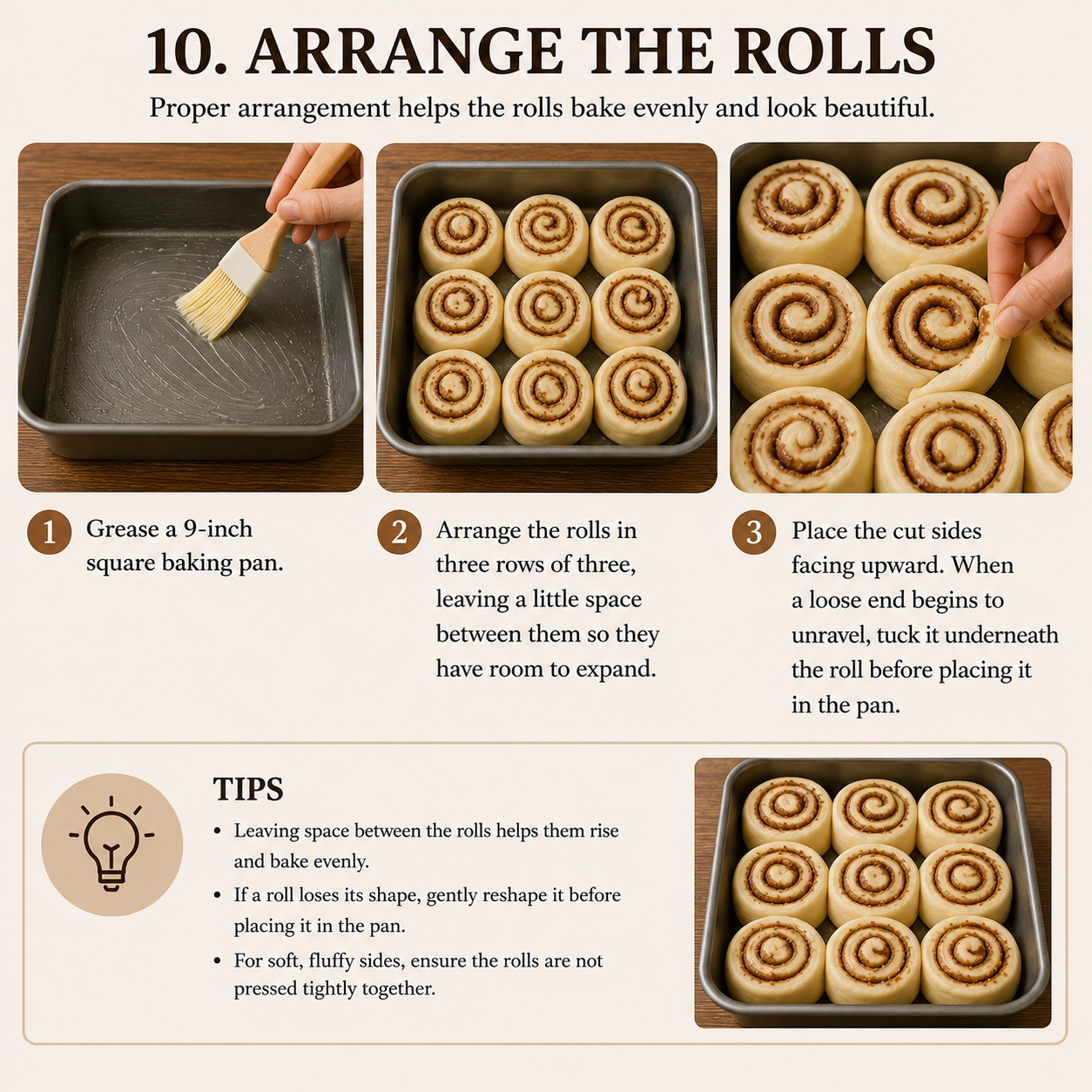
Grease a 9-inch square baking pan.
Arrange the rolls in three rows of three, leaving a little space between them so they have room to expand.
Place the cut sides facing upward. When a loose end begins to unravel, tuck it underneath the roll before placing it in the pan.
11. Complete the Second Rise
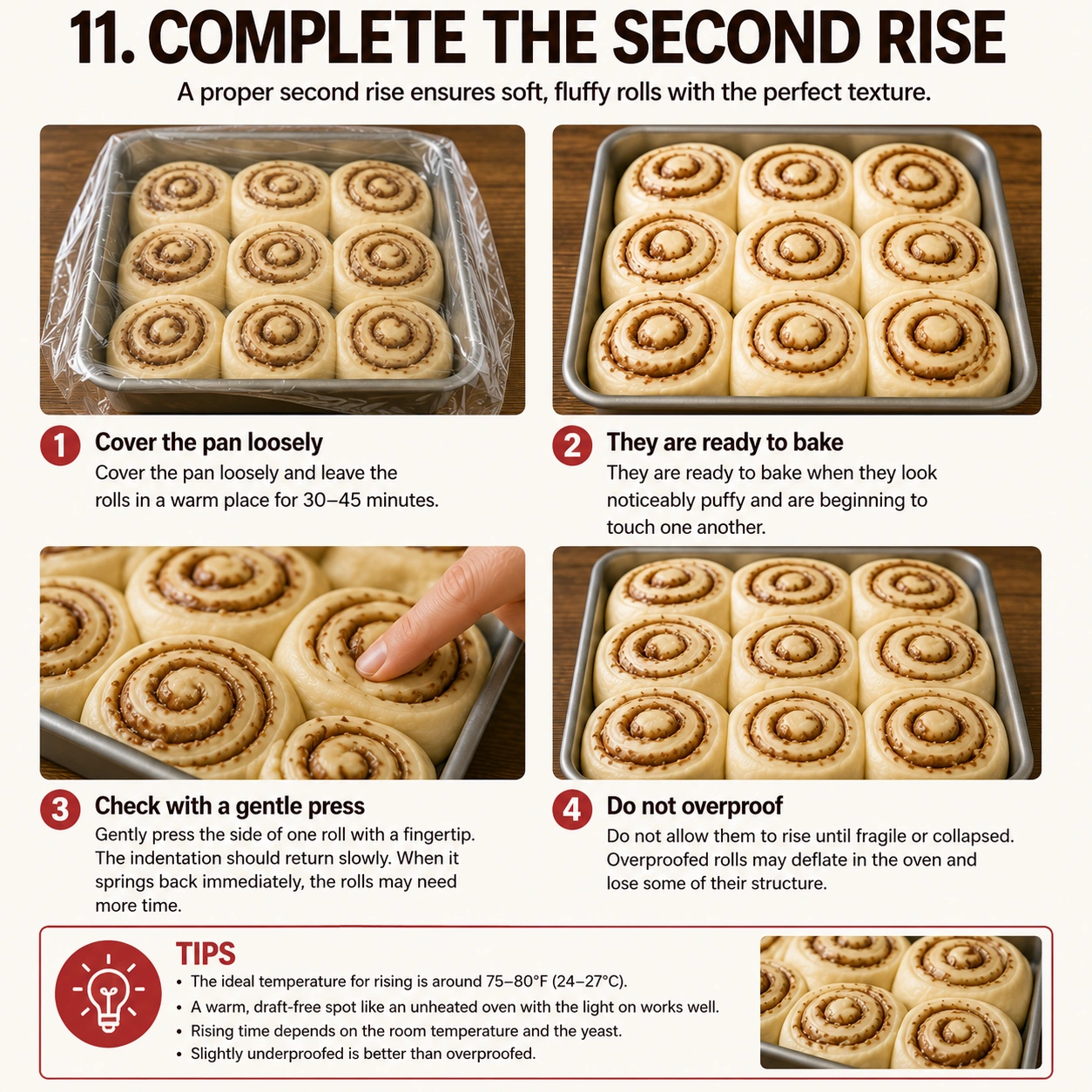
Cover the pan loosely and leave the rolls in a warm place for 30–45 minutes.
They are ready to bake when they look noticeably puffy and are beginning to touch one another.
Gently press the side of one roll with a fingertip. The indentation should return slowly. When it springs back immediately, the rolls may need more time.
Do not allow them to rise until fragile or collapsed. Overproofed rolls may deflate in the oven and lose some of their structure.
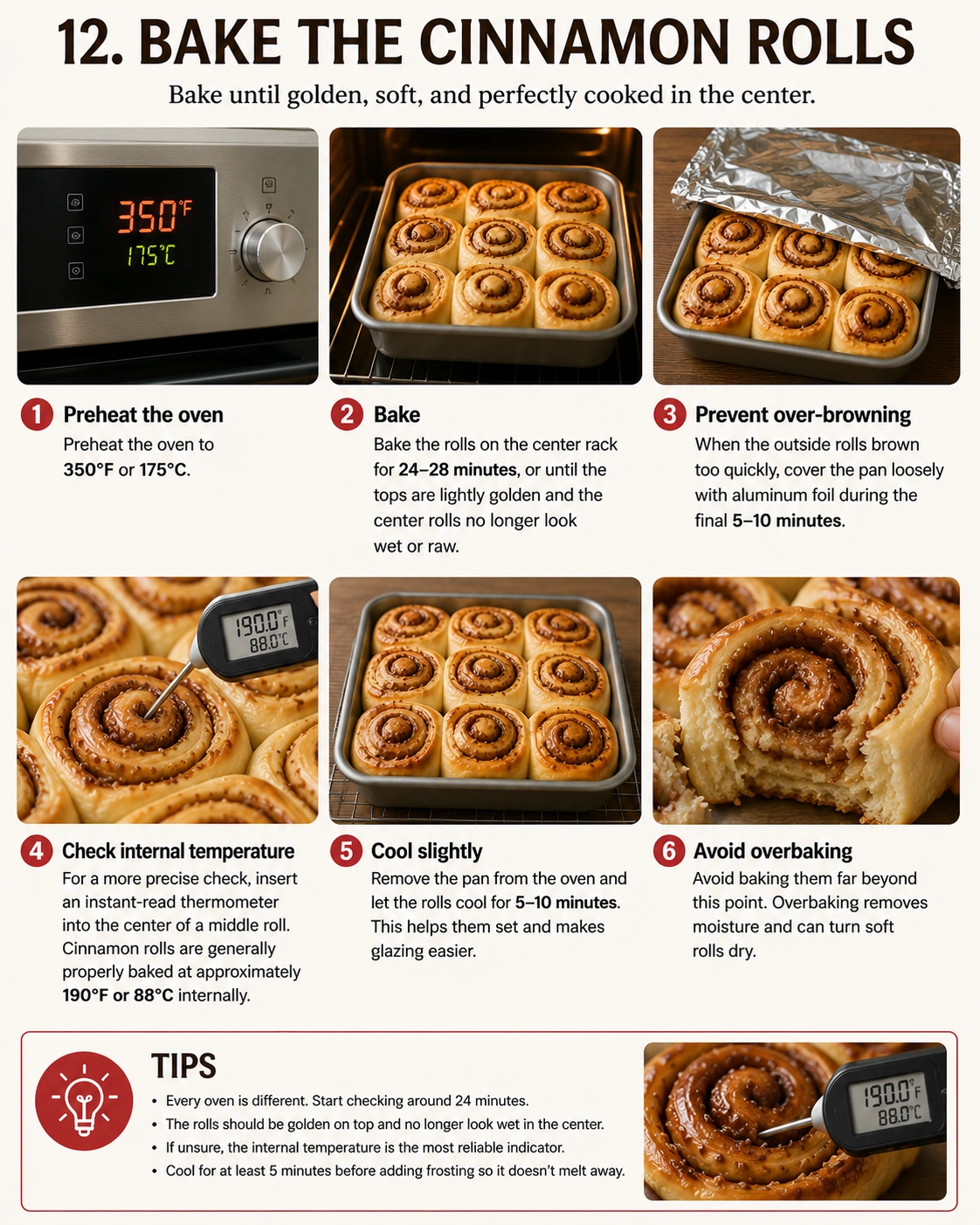
12. Bake the Cinnamon Rolls
Preheat the oven to 350°F or 175°C.
Bake the rolls on the center rack for 24–28 minutes, or until the tops are lightly golden and the center rolls no longer look wet or raw.
When the outside rolls brown too quickly, cover the pan loosely with aluminum foil during the final 5–10 minutes.
For a more precise check, insert an instant-read thermometer into the center of a middle roll. Cinnamon rolls are generally properly baked at approximately 190°F or 88°C internally.
Avoid baking them far beyond this point. Overbaking removes moisture and can turn soft rolls dry.
13. Make the Cream Cheese Frosting
While the rolls bake, place the softened cream cheese and butter in a medium bowl.
Beat until completely smooth and free of visible lumps.
Add the powdered sugar, vanilla, and salt. Beat again until light and creamy.
Add milk or cream one teaspoon at a time until the frosting reaches your preferred consistency.
For a thick frosting, use little or no additional milk. For a softer glaze that runs between the spirals, add slightly more.
14. Frost and Serve
Leave the baked rolls in the pan for 10–15 minutes.
Spread the cream cheese frosting over the warm rolls. The frosting should soften and move gently into the spirals without melting completely.
Serve the rolls warm.
For a more defined white frosting layer, wait until the rolls have cooled for approximately 25–30 minutes before frosting them.
For a quick savory snack, try our Loaded Nachos in 5 Easy Steps.
How to Make Overnight Cinnamon Rolls
Prepare the recipe through the shaping step and arrange the rolls in the greased pan.
Cover the pan securely and refrigerate it for up to approximately 16 hours.
The following morning, remove the rolls from the refrigerator and keep them covered at room temperature for 45–75 minutes.
They should look puffy before entering the oven. Very cold rolls placed directly in the oven may bake unevenly and remain dense in the middle.
Preheat the oven only after the rolls have started warming. Bake them according to the normal instructions, adding a few minutes when necessary.
For additional baking guidance, see King Arthur Baking’s Perfectly Pillowy Cinnamon Rolls recipe. (kingarthurbaking.com)
How to Keep Cinnamon Rolls Soft
Measure the Flour Carefully
Using a kitchen scale is the most reliable method. When using cups, loosen the flour, spoon it into the measuring cup, and level the top.
Scooping directly from a compressed flour container may introduce too much flour.
Keep the Dough Slightly Tacky
A soft dough produces softer rolls. It should be manageable but does not need to feel completely dry.
Use lightly greased hands rather than repeatedly adding flour when the dough is only slightly sticky.
Give the Dough Enough Time to Rise
Rising times are estimates. Judge the dough by its size and appearance.
Underproofed dough produces compact rolls, while properly proofed dough looks light and puffy.
Avoid Overbaking
Remove the rolls when the center is cooked and the tops are lightly golden. Dark brown cinnamon rolls are often drier around the edges.
Store Them Properly
Exposure to air causes rolls to dry quickly. Cover leftovers tightly as soon as they have cooled.
Troubleshooting Homemade Cinnamon Rolls
Why Didn’t My Dough Rise?
The yeast may have been expired or exposed to liquid that was too hot.
The room may also have been too cold. Move the covered dough to a warmer location and allow additional time before deciding that it has failed.
Why Are My Cinnamon Rolls Dense?
Dense rolls are usually caused by too much flour, insufficient kneading, inactive yeast, or inadequate rising time.
The shaped rolls should look puffy before baking. Baking them while they are still tight and compact will produce a heavier texture.
Why Did the Filling Leak Out?
A small amount of melted filling in the bottom of the pan is normal.
Excessive leakage can happen when the butter is melted instead of softened, too much filling is used, or the dough is rolled loosely.
The tablespoon of flour in this filling helps absorb some of the melted butter and sugar.
Why Are the Centers Still Raw?
The pan may have been removed too early, the rolls may have been cut too thick, or the oven may run cooler than its indicated setting.
Cover the browned tops with foil and return the pan to the oven. Continue baking until the center reaches approximately 190°F or 88°C.
Why Did the Frosting Melt Completely?
The rolls were probably too hot.
Allow them to cool for at least 10–15 minutes before applying the frosting. For a thicker visible layer, wait closer to 30 minutes.
Why Is My Frosting Lumpy?
The cream cheese or butter may have been too cold.
Allow both ingredients to soften fully, beat them together before adding the powdered sugar, and scrape the bowl several times during mixing.
Recipe Variations
Vanilla Glaze Without Cream Cheese
Mix:
- 1½ cups powdered sugar
- 2–3 tablespoons milk
- ½ teaspoon vanilla
- Small pinch of salt
Whisk until smooth and pour over the warm rolls.
Orange Cinnamon Rolls
Add finely grated orange zest to the filling and replace some of the frosting’s milk with fresh orange juice.
Pecan Cinnamon Rolls
Sprinkle approximately ½ cup of chopped toasted pecans over the cinnamon filling before rolling the dough.
Raisin Cinnamon Rolls
Scatter approximately ½ cup of raisins over the filling.
Soaking the raisins briefly in warm water and drying them before use helps prevent them from drawing moisture from the dough.
Maple Cream Cheese Frosting
Replace the vanilla with 1–2 tablespoons of pure maple syrup. Reduce the additional milk so that the frosting does not become too thin.
How to Store Cinnamon Rolls
Because this recipe uses cream cheese frosting, the frosted rolls should be refrigerated rather than stored for long periods at room temperature. USDA guidance distinguishes cream-cheese-frosted baked goods from ordinary breads and rolls that do not require refrigeration.
Do not leave frosted rolls at room temperature for more than two hours, or one hour when the surrounding temperature is above 90°F or 32°C.
Place the rolls in an airtight container and refrigerate them for up to three or four days. USDA guidance generally recommends using refrigerated leftovers within three to four days.
Reheating Instructions
Place one refrigerated cinnamon roll on a microwave-safe plate.
Microwave it for approximately 15–25 seconds, checking frequently. Heating it too long can melt the frosting completely and make the bread tough after cooling.
For several rolls, cover the baking pan loosely with foil and warm them in a 300°F or 150°C oven for approximately 10–15 minutes.
Freezing Instructions
For the best texture, freeze the rolls without frosting.
Wrap completely cooled rolls individually, place them in a freezer-safe container, and freeze for up to one month.
Thaw them overnight in the refrigerator or for several hours at room temperature. Warm them gently before adding freshly prepared frosting.
Frequently Asked Questions
Can I make cinnamon rolls without a stand mixer?
Yes. Mix the ingredients with a wooden spoon and knead the dough by hand for approximately 8–10 minutes. The dough should become smooth and elastic. Avoid continually adding flour while kneading, because the dough is supposed to remain slightly tacky.
Can I use instant yeast instead of active dry yeast?
Yes. Replace active dry yeast with an equal amount of instant yeast. Instant yeast can usually be mixed directly with the flour, although the liquid should still be warm rather than hot. The dough may rise slightly faster, so judge readiness by appearance instead of time alone.
Can I use bread flour?
Yes. Bread flour creates slightly chewier rolls with more structure. All-purpose flour produces a softer, more tender result. When using bread flour, the dough may need a small additional amount of milk because bread flour generally absorbs more liquid.
Can I prepare the rolls the night before?
Yes. Shape the rolls, arrange them in the pan, cover them securely, and refrigerate overnight. Let them warm and become visibly puffy at room temperature before baking. This usually takes 45–75 minutes, depending on the temperature of the kitchen.
Can I use a different pan?
Yes. A 9-inch square pan gives nine rolls a tall, soft-sided shape. A similar round pan can also work. A larger pan creates more space around the rolls, which may make the exposed edges firmer and may slightly reduce baking time.
How do I cut cinnamon rolls without crushing them?
Use unflavored dental floss or a sharp serrated knife. Slide the floss underneath the log, cross the ends over the top, and pull in opposite directions. This creates clean slices without pressing down on the spirals.
How do I know when the rolls have risen enough?
The shaped rolls should look puffy, expanded, and close to touching. A gentle fingertip indentation should return slowly. Dough that springs back immediately needs more time, while an indentation that never moves may indicate overproofing.
Can I frost the rolls while they are hot?
Allow them to cool for at least 10–15 minutes first. Frosting added immediately after baking may melt into the pan. Warm rolls soften the frosting pleasantly, while cooler rolls retain a thicker, more visible coating.
Final Thoughts
These cinnamon rolls with cream cheese frosting deliver soft spirals, a buttery cinnamon and brown sugar filling, and a smooth vanilla topping without requiring complicated bakery equipment.
Keep the dough soft, allow both rises to finish, and remove the rolls once their centers are properly baked. Those steps matter more than following the estimated times exactly.
Serve the cinnamon rolls warm for breakfast, brunch, holidays, or an easy homemade dessert.